The air handler is humming in the hall closet and the vents on the lanai side are pushing room-temperature air. On a 1970s block ranch east of Jacaranda Boulevard, that is the usual Venice Gardens call: the system is running, the house is not cooling, and the first hour of diagnosis almost always lands on a dirty coil, a clogged drain, a weak capacitor, or a heat pump left in the wrong mode.
A Venice Gardens ranch that will not cool
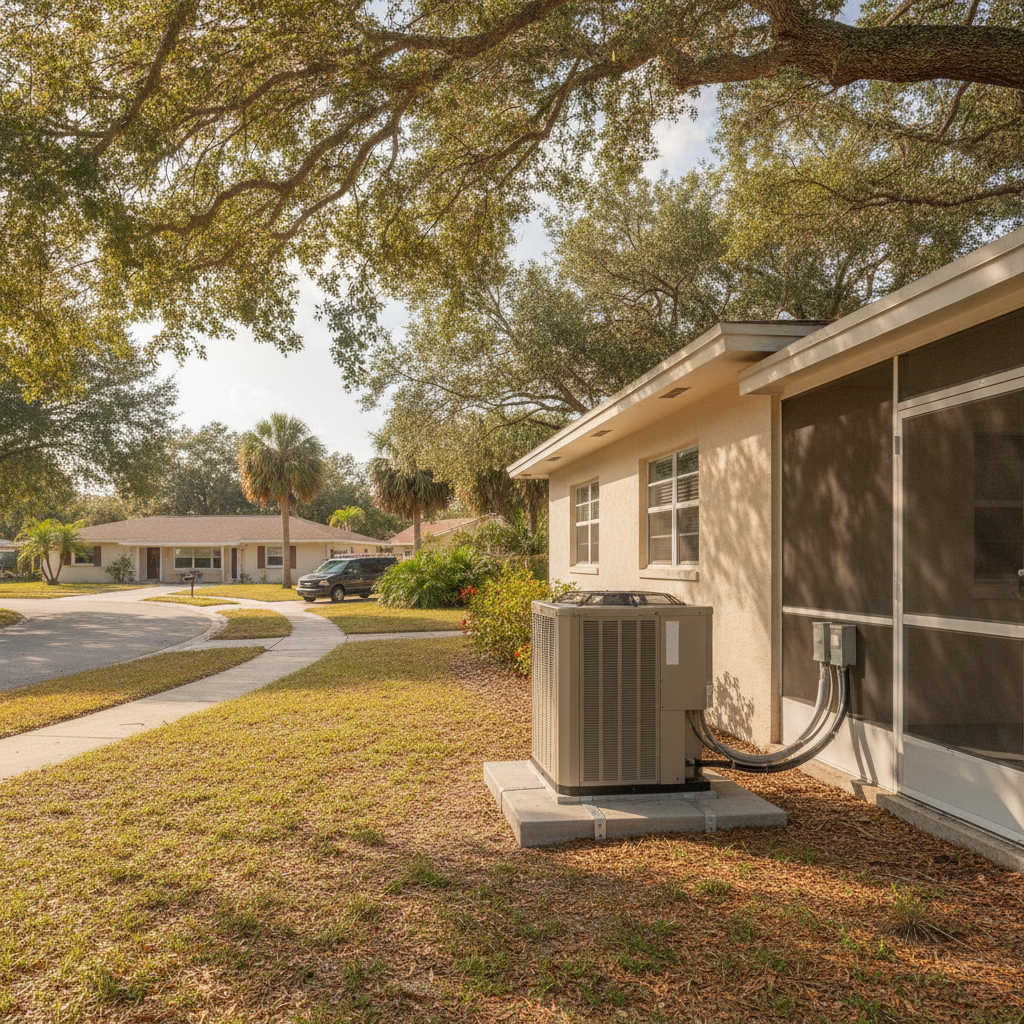
Most of these houses are single-story stucco with a screened lanai and the condenser sitting on a pad in the side yard, tucked between the hose bib and a hedge the lawn crew never quite trims back. The indoor unit is often in a hall closet or a garage attic hatch. When cooling fails in August, the outdoor fan may still spin. The thermostat may still click. None of that means the house will drop out of the eighties.
A packed outdoor coil is the first local pattern. Oak pollen, grass clippings, and the fine grit that blows off Center Road collect in the fins. The compressor keeps pumping, but the coil cannot dump heat, so the air off the supply vents feels tired and damp instead of cold. Leave that load on long enough and the indoor coil can ice over, which makes the air even weaker until the ice melts and the cycle starts again.
The second pattern is the condensate drain and the float switch. Venice Gardens carries some of the heaviest seasonal occupancy in the Venice and North pocket. A house closed from spring into fall sits with the drain line dry. Algae and dust settle in the trap. The first real cool-down after the owners return fills the pan, the float rises, and the 24-volt control circuit opens. The system looks dead. Sometimes there is a wet spot on the closet ceiling. Sometimes there is only silence from the air handler.
A weak capacitor is the third. The outdoor unit hums and does not start, or the compressor struggles and the breaker holds. Capacitors age in the heat on that side-yard pad. A unit that sat for six months is a common candidate. The licensed HVAC contractor we send tests it. A homeowner should not pull the disconnect and start pulling wires.
The fourth is a heat pump in the wrong mode. Plenty of these ranches already run a heat pump, because one system covers the long cooling season and the occasional cool snap. A helper, a returning snowbird, or a thermostat that got bumped into heat or emergency heat will run the outdoor unit and still leave the house warm. Before anyone talks about a leak, the mode on the wall has to be right.
Filter changes and a gentle garden-hose rinse of the outdoor coil are the honest homeowner limits. Adding refrigerant is not. Opening a sealed system is federal EPA Section 608 work, and it belongs to a certified technician. If the house is warm and the vents are not, that is an AC repair visit, not a weekend project.
The same “running but not cooling” picture shows up elsewhere in the city, and our Venice cooling guide walks the broader symptom. The Venice Gardens version is this ranch, this side-yard condenser, and this seasonal calendar.
How this pocket differs from Venice and Laurel
Venice Gardens sits in Sarasota County, inland from the Intracoastal, between Venice proper and Laurel. It is not the historic downtown, and it is not the barrier-island salt of Manasota Key. The housing stock is 1970s and 1980s suburban: concrete-block ranches, cul-de-sacs under live oaks, original duct runs in hot attics, and condensers screened by shrubs instead of by a golf-course setback.
That location changes the repair, not just the map pin. A condenser a few miles closer to the Gulf in Venice proper takes more salt on the fins and the cabinet. The air conditioning repair path in Venice still starts with coil, drain, and electrical, but the outdoor unit there often looks older than its years because of the air off the water. Venice Gardens units fail more from sitting, from lawn debris, and from attic ductwork that has been baking since the house was new.
Laurel is the next pocket north, still Sarasota County, with a similar ranch layout and a slightly different mix of year-round homes. Our Laurel AC repair notes cover that stretch. A page that swapped the city name and left the rest alone would miss the seasonal load here. Venice Gardens empties in late spring. Thermostats go to a setback. Drain lines dry. Capacitors sit in the sun on the pad. The first real demand of the return season is when the float switch and the start components show up.
County lines matter when the job grows past a repair. This whole pocket is Sarasota County, so the permit, if the work becomes a changeout, goes to Sarasota County’s building department, not Charlotte County’s. Florida treats an air-conditioning changeout as mechanical work. The state’s $7,500 permit exemption does not cover mechanical work on a single-family house, so a replacement is permitted work at any price. A capacitor swap or a drain clearing is a different conversation. For the current fee on whatever the contractor is pulling, ask the Sarasota County building department before you budget. Inspection fees, under Florida law, may not be based on the total cost of the project.
If you want the neighborhood service map rather than this repair walkthrough, start at HVAC service in Venice Gardens. The contractors we send for this pocket are licensed and insured. You can confirm a Florida air-conditioning contractor on the DBPR license search by name, county, or license type.
What a licensed tech checks on the first visit
A diagnostic visit in this footprint runs $89 to $150. Most repairs, parts and labor after that diagnostic, land between $150 and $650. Those are market ranges for this metro, not a quote and not a promise that your house will sit in the middle of them. A longer line set, a condenser buried behind a hedge, or a second trip into a tight attic closet moves labor up. A capacitor and a drain clearing sit at the other end.
The licensed HVAC contractor we send works the cheap, high-odds items first. Thermostat mode, fan setting, and batteries. Filter. Outdoor coil and the clearance around the pad. The capacitor at the condenser. Voltage at the disconnect. The drain line and the float switch at the air handler. Only after those are clean does anyone open a refrigerant circuit, and only a technician with the right EPA Section 608 certification should do that.
On a Venice Gardens ranch, that order matches how the houses actually fail. A snowbird return in November with a silent air handler is often the float switch. An August afternoon with a humming outdoor unit and no start is often the capacitor. A house that “just does not feel cold” with the fan running is often the coil packed with grass, or a heat pump still in heat. Short-cycling, where the system starts and stops every few minutes, is a different feel: the house stays clammy because the unit never runs long enough to wring humidity out of the air. That can be a sizing leftover from the original 1970s install, a clogged filter, or a control problem. The tech has to see it run.
HVAC maintenance is how a lot of these calls never happen. A tune-up visit runs $89 to $150, less on an annual plan. The outdoor coil gets cleaned before the hedge wins. The drain gets flushed before the first return trip of the season. The capacitor gets tested while the system still starts. None of that is glamorous. It is how a 1980s ranch on a quiet cul-de-sac makes it through hurricane season, which the National Hurricane Center sets from June 1 to November 30, with the peak of activity from mid-August through mid-October.
If the first visit finds a dead compressor, a failed coil, or ductwork that has been leaking in the attic since the house was built, the conversation can shift from repair to replacement. A full changeout on a single-family home in this metro runs $5,500 to $12,000 installed, with a standard split system often in the $5,500 to $8,500 band and a higher-efficiency variable-speed system in the $9,000 to $12,000 band. Heat pumps, which this metro uses as the default replacement because they cool and cover the cool snaps, run $6,000 to $14,000 installed. Those ranges are for a changeout, not for the repair you called about. Stretching a replacement number onto a drain job is how a homeowner gets lost.
The brand’s job is the match. We answer the line and send a licensed, insured HVAC contractor. The pro we send opens the unit, pulls a permit if the work requires one, and does the wrench work. Englewood Air Pro does not hold a contractor license and does not advertise itself as the installer.
Common questions on Venice Gardens calls
How much does AC repair cost in Venice Gardens?
The diagnostic is $89 to $150. After that, most repairs with parts and labor fall between $150 and $650. After-hours and holiday dispatch, when you need it, runs $200 to $450 at the high end of that emergency diagnostic range. A longer copper run, a condenser that has to be pulled away from a lanai wall, or a second visit into a tight closet is what pushes a job toward the top of the band. A capacitor, a float switch, or a drain clearing is what keeps it lower. Ask the contractor for the number that belongs to your house, not a number borrowed from a different job.
Can I add refrigerant if the air feels weak?
No. Refrigerant work is a sealed-system job. Federal rules under Section 608 of the Clean Air Act require certification for anyone who maintains, services, repairs, or disposes of equipment that could release refrigerant. A weak-air call in this neighborhood is still more likely to be a dirty coil, a clogged drain, a tired capacitor, or a heat pump in heat. If the contractor does find a leak, that is their diagnosis to make, and their recovery and recharge to perform. A can from a parts aisle does not fix a leak, and it can wreck a compressor that was already struggling.
When to call us
When a Venice Gardens ranch is running and the house stays warm, or the outdoor unit hums and will not start, the next step is a licensed HVAC contractor on site, not a refrigerant can and not a guess at the capacitor. We match you with a licensed and insured pro who will open the unit and work the coil, the drain, the electrical, and the mode on the thermostat in that order. Call us at (941) 292-6250.