What to Check on Your AC Before Flipping It Back On After a Storm
After a Gulf coast storm, powering the AC back on before checking for water and wind damage is how a fixable problem turns into a replaced compressor or an electrical fire.
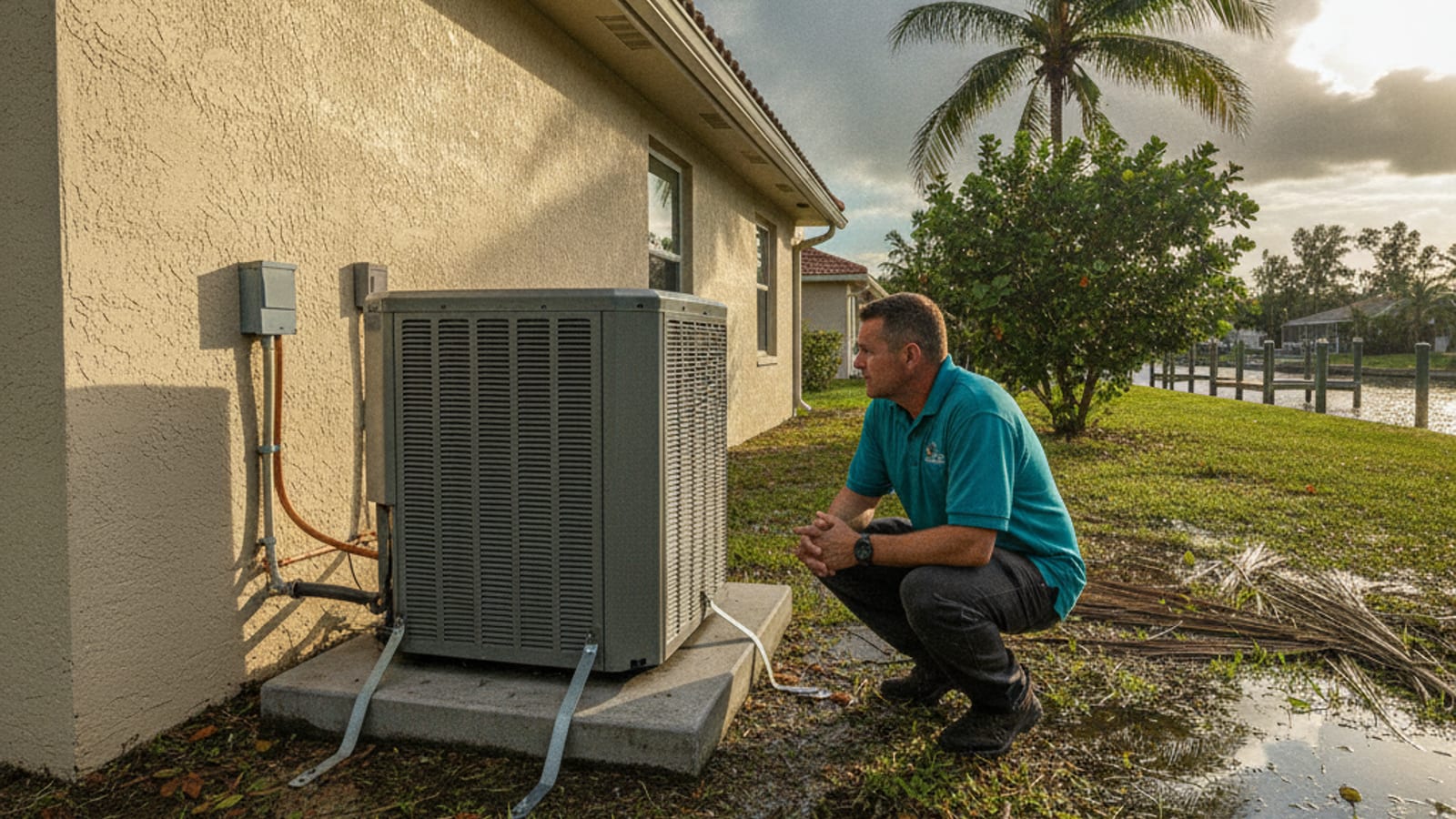
Stop Before You Flip Any Breaker
Do not restore power to the AC system until you've done a visual check, even if the power just came back on across the neighborhood. Look at the outdoor unit for standing water, mud lines, or debris packed into the cabinet, any of those mean water may have reached the electrical components. Check that the condenser hasn't shifted off its pad or leaned against fencing or trees, storm winds move units more than owners expect. If the unit was submerged at any point during flooding, treat it as an electrical hazard, not just a dirty coil, and don't power it on at all until a licensed pro has checked it.
Check the Line Set and Disconnect Box
Walk the refrigerant lines running between the outdoor unit and the house and look for kinks, exposed sections where insulation tore away, or lines pulled loose from fallen debris. Open the outdoor disconnect box only if it's dry, and look for corrosion, discoloration, or a burnt smell inside, any of which mean it got wet or arced during the storm. If the disconnect box itself was underwater, don't touch it, that's a job for an electrician or your HVAC contractor with the right test equipment, not a homeowner with a screwdriver.
When to Wait for a Professional Instead of Testing It Yourself
Skip the DIY restart entirely if the unit was submerged, if you smell anything burnt near the disconnect box or air handler, if the indoor air handler is in an attic that took wind or water intrusion, or if you're not fully sure the unit stayed dry throughout the storm. A four-point insurance inspection after a named storm often flags AC equipment specifically, and a documented professional check protects you twice, once against a compressor you fry by powering on wet equipment, and once with the paper trail an adjuster wants to see. When in doubt after a storm, call before you flip the switch.
Rather have a pro handle it?
Same-day HVAC service across the Englewood area. A real HVAC pro picks up.
Keep reading.
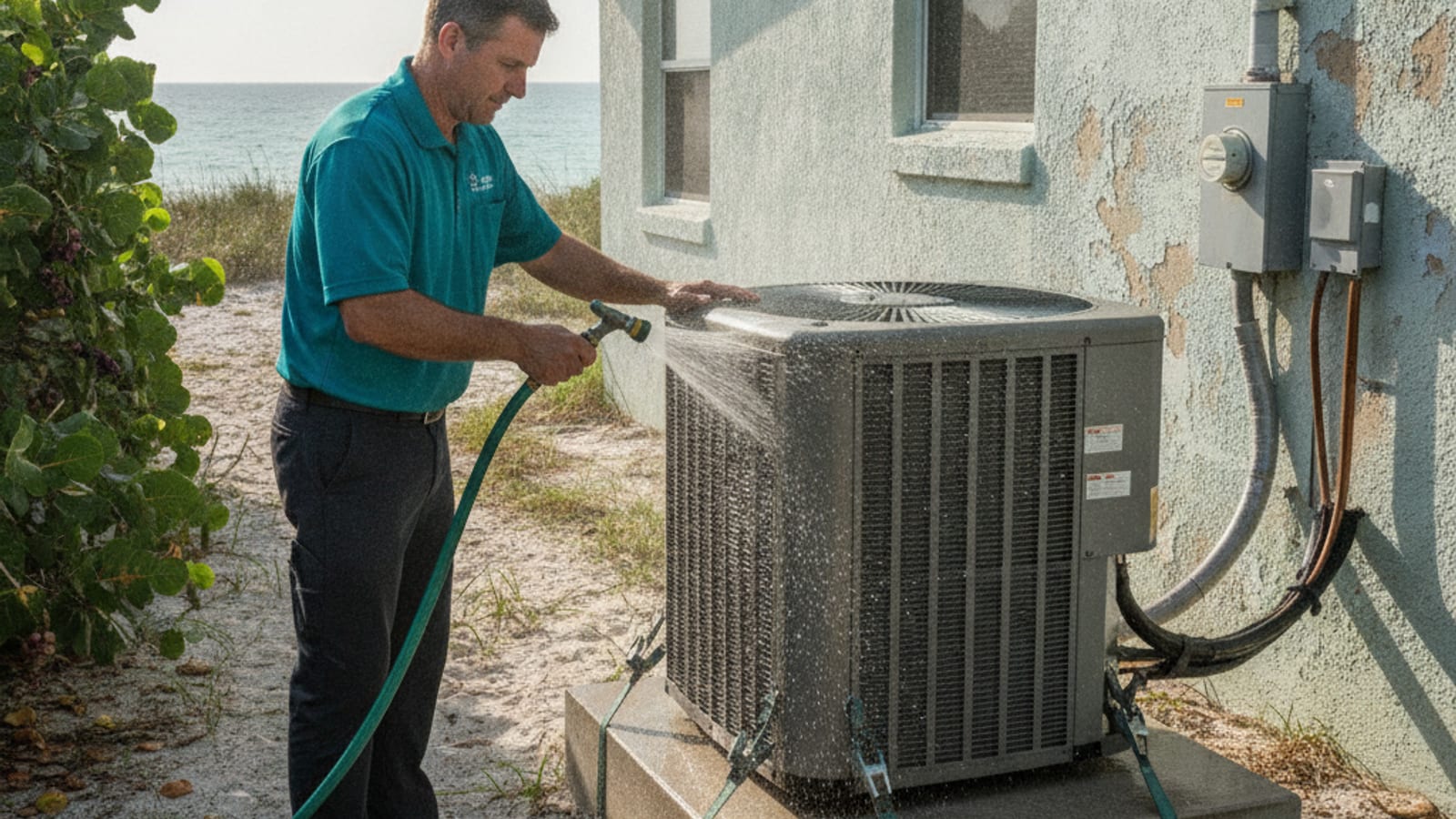
Salt-Air Condenser Care for Manasota Key, Boca Grande, and Coastal Englewood
A condenser a few miles from the Gulf corrodes years faster than the same unit inland, and a simple rinse-down schedule is the cheapest way to protect it.
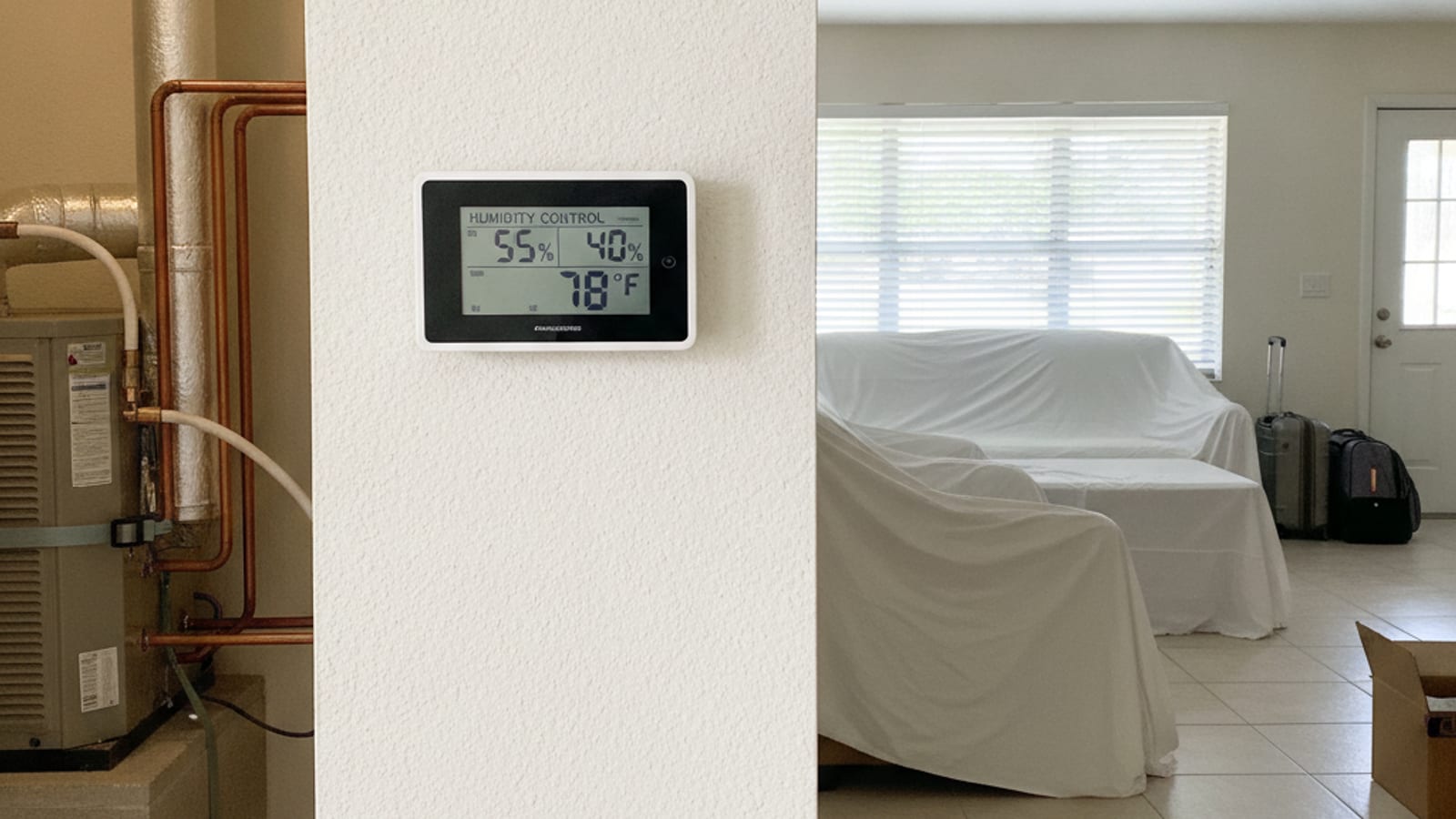
The Snowbird's AC Shutdown Checklist Before You Head North
Leaving an Englewood home for five to seven months takes more than just turning the thermostat up, and doing it wrong is how owners come back to mold instead of a clean house.
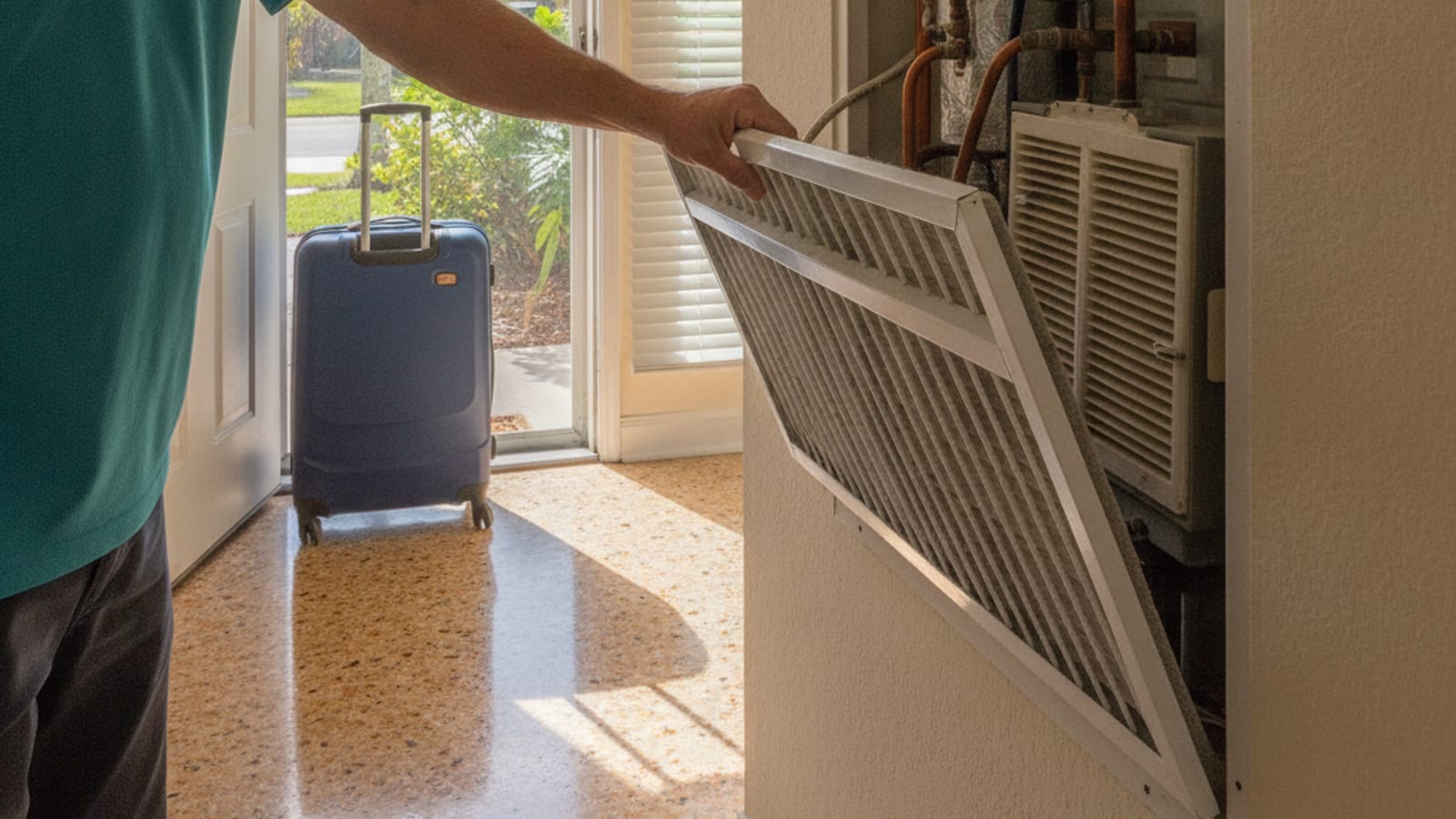
Reopening Your Englewood Home's AC After Months Away
Turning the system back on after five or six months of light or no use isn't a simple flip of a switch, and a rushed startup is how small issues become no-cool emergencies in week one.