Ductwork on Boca Grande faces a different enemy than ducts on the mainland. Salt air doesn’t just make outdoor equipment corrode faster. It gets inside your duct system, settles on metal surfaces, combines with island humidity, and starts a slow degradation that mainlanders never deal with. A duct system that would run reliably for fifteen years in Port Charlotte can show serious problems in half that time on Boca Grande.
Understanding what salt air actually does to your ducts, how to spot damage early, and when a cleaning or repair becomes necessary, is the difference between a system that lasts and one that turns into an expensive replacement in a few years.
Why barrier island ductwork is a different problem
Ducts on the mainland contend with Florida humidity, which is significant on its own. Salt-laden air adds a corrosive layer that humidity alone simply doesn’t create. The salt particles carried by Gulf winds settle on any exposed metal in your duct system, condense in humid air, and trigger accelerated oxidation. This isn’t cosmetic rust. It affects your cooling, damages insulation, and can eventually compromise the entire duct system’s integrity.
The problem compounds on an island like Boca Grande because wind patterns concentrate salt air year-round, and there’s nowhere to escape it. A property a few miles inland experiences much lower salt exposure. On Boca Grande, your outdoor equipment, exposed ductwork, and metal fasteners all get the full dose, every day, with no break in the cycle.
What salt air actually does to your ducts
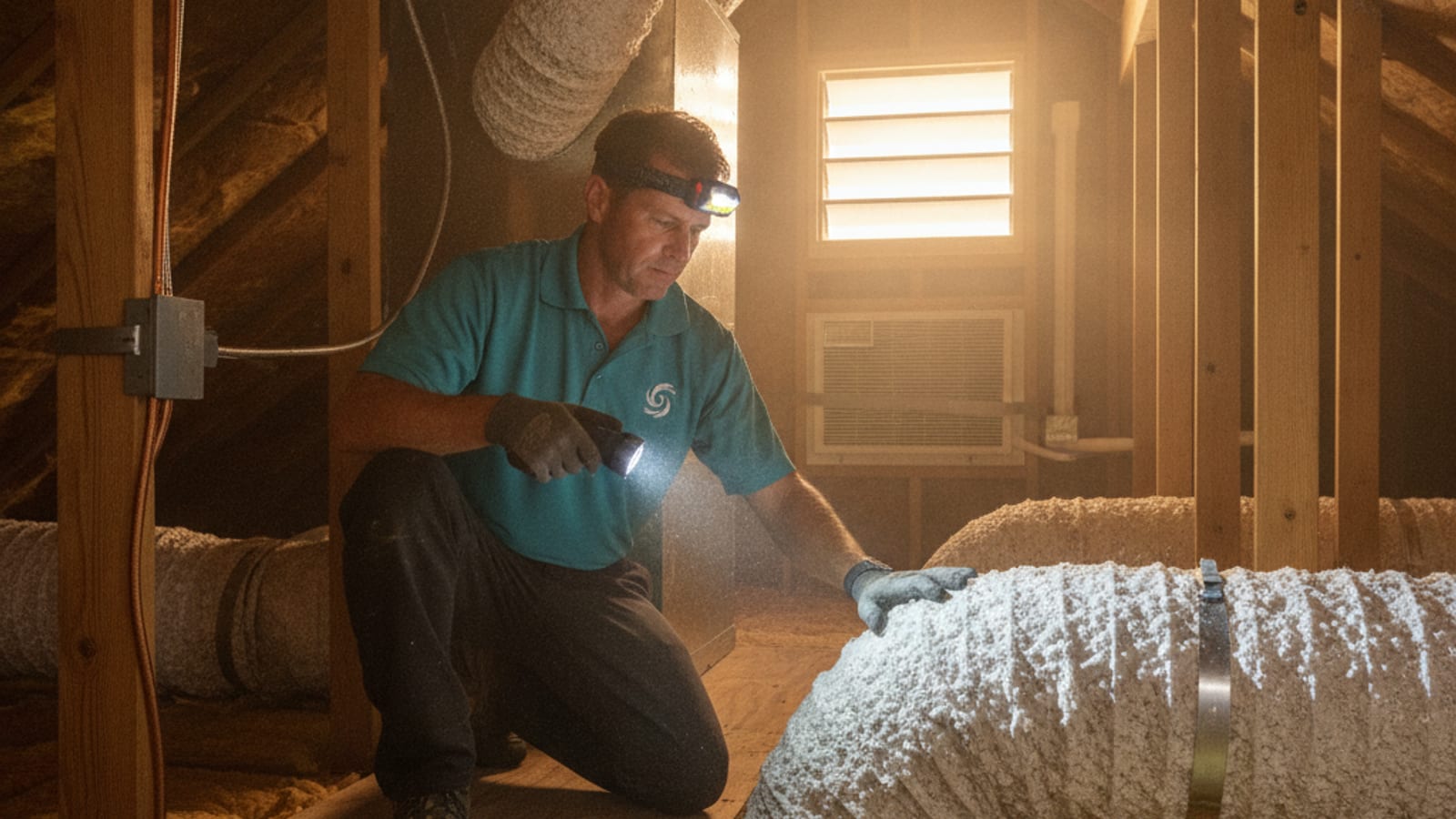
Flexible ductwork is particularly vulnerable. The outer vapor barrier and the flexible wire helix corrode as salt particles settle on them, especially where the flex duct is mounted close to the exterior or runs through unconditioned spaces like attics that catch Gulf air coming through ridge vents. Over time, this corrosion weakens the duct’s structural integrity. It can also perforate the vapor barrier, letting conditioned air escape into humid attic space.
Metal ductwork, which is more common in older Boca Grande homes, faces seam separation and joint corrosion. The mastic sealant that seals duct connections degrades when exposed to salt-heavy air. Fasteners rust through. Worst of all, moisture condenses on the inside of metal ducts running through hot attic space, creating the kind of environment where mold actually grows, which creates a health concern on top of the mechanical issue.
Inside your air handler and along any exposed return ductwork, salt air finds its way into electrical connections and control components. Corrosion on a thermostat wire, an air handler capacitor, or a blower motor terminal can cause intermittent failures that are hard to diagnose until the component actually stops working.
How to spot barrier island ductwork problems before they cost you
Check your attic, if you can safely access it, and look for these signs. Flexible ductwork that’s visibly white or gray with a chalky coating isn’t dirt. That’s salt corrosion on the outer membrane. Metal ductwork with visible pitting or orange rust stains is already degraded. Musty or salty odors from your vents when the system runs suggest mold or moisture inside the ducts.
Energy bills that climb faster than they did last year, even with the same thermostat settings, often point to leaking or damaged ducts losing conditioned air. Rooms that used to cool evenly now running hot or cold while others stay comfortable can mean ductwork separation or blocked sections.
If you haven’t had your ducts inspected or cleaned since you bought the property, or if you can’t remember the last time they were serviced, a professional inspection is overdue. The salt air environment on Boca Grande makes this maintenance more urgent than it would be elsewhere.
When cleaning is enough and when you need repair
A professional duct cleaning with negative-pressure equipment removes salt deposits, dust, and accumulated debris that blocks airflow. In many cases, especially for systems that are younger and have only surface-level corrosion, a thorough cleaning combined with a visual inspection can restore most of the system’s function and buy you several more years.
During the same cleaning visit, accessible joints and minor leaks can be sealed with mastic, which is usually priced as an add-on. This is worth doing while the technician is already inside the system.
Ductwork repair, a separate and typically larger job, becomes necessary when you have crushed sections, perforated flex ducts that can’t be sealed, separated joints that can’t be mastic-sealed, or corrosion so severe it’s allowing conditioned air to escape faster than sealing makes sense. In those cases, the damaged section often needs to be replaced rather than repaired.
The call to make: have a professional inspect your system, document what they find, and then decide whether cleaning and sealing is enough or whether repair is necessary. Waiting for a system to fail completely almost always costs more.
Salt air maintenance that actually extends duct life
A cleaning every three to five years on Boca Grande, rather than the typical five to seven years on the mainland, is a smart investment. The extra frequency doesn’t sound like much until you realize you’re catching corrosion and moisture buildup before they become structural problems.
Check or replace your air filter more frequently than you would inland. Salt air carries more particulates and your filter gets dirtier faster. A clogged filter forces your system to work harder and can restrict airflow enough to cause coil freezing, which adds another repair headache on top of ductwork issues.
Make sure your attic ridge vents and gable vents are properly screened to keep salt spray from entering directly into your attic space. This is a small detail, but it significantly reduces how much salt is reaching your ductwork in the first place.
Have a professional check your air handler and ductwork electrical connections during annual maintenance visits. Corroded connections can be cleaned or replaced before they cause a system failure on a 95-degree day when you can’t get same-day service.
Barrier islands vs mainland: why you can’t skip this
Boca Grande homes are special. They’re beautiful and worth the premium you paid. But they require a different approach to ductwork maintenance than homes just a few miles away in Port Charlotte or North Port. The salt air environment isn’t forgiving of deferred maintenance.
Getting ahead of ductwork problems on a barrier island isn’t optional if you want your system to last. It’s the difference between a system that costs $400 to clean and seal versus one that costs thousands to replace because corrosion was never addressed.
Frequently asked questions
How often should I have my Boca Grande ductwork cleaned?
Every three to five years on a barrier island, compared to five to seven years inland. Salt air accelerates corrosion and moisture buildup. More frequent cleaning catches problems before they become expensive repairs.
Can salt air permanently damage my ductwork?
Yes. Severe corrosion, perforated flex ducts, and seam separation aren’t repairable short of replacing the damaged section. This is why early cleaning and inspection matter. Catching corrosion in its early stages, when cleaning and sealing can still extend the system’s life, saves thousands down the road.
Should I worry about mold if I’m getting salt air in my ducts?
Yes. Salt air combined with humidity creates conditions where mold can grow inside ductwork, especially on metal ducts where condensation collects. If you notice musty odors when your system runs, professional inspection and cleaning should be your first step.
Can I clean my own ductwork on Boca Grande?
Professional negative-pressure cleaning is worth it for barrier island homes. The salt deposits and moisture are heavier than typical dust, and a shop vac won’t clear them. Professional equipment actually removes what’s in there rather than just agitating it.
Is ductwork repair different from cleaning on a barrier island?
Yes. Cleaning removes deposits and seals minor accessible leaks during the same visit. Repair addresses crushed, perforated, or severely corroded sections that can’t be sealed. Your inspector can tell you which one your system needs.
How do I verify a ductwork service technician is properly licensed?
Florida requires a CAC license for HVAC-related work, including ductwork cleaning and repair. You can verify any contractor’s license for free at myfloridalicense.com before scheduling a service visit.
If your Boca Grande ductwork hasn’t been inspected or cleaned in years, call (941) 292-6250 and we’ll connect you with a local pro who knows what salt air does to island homes and can assess whether cleaning or repair is what you actually need.