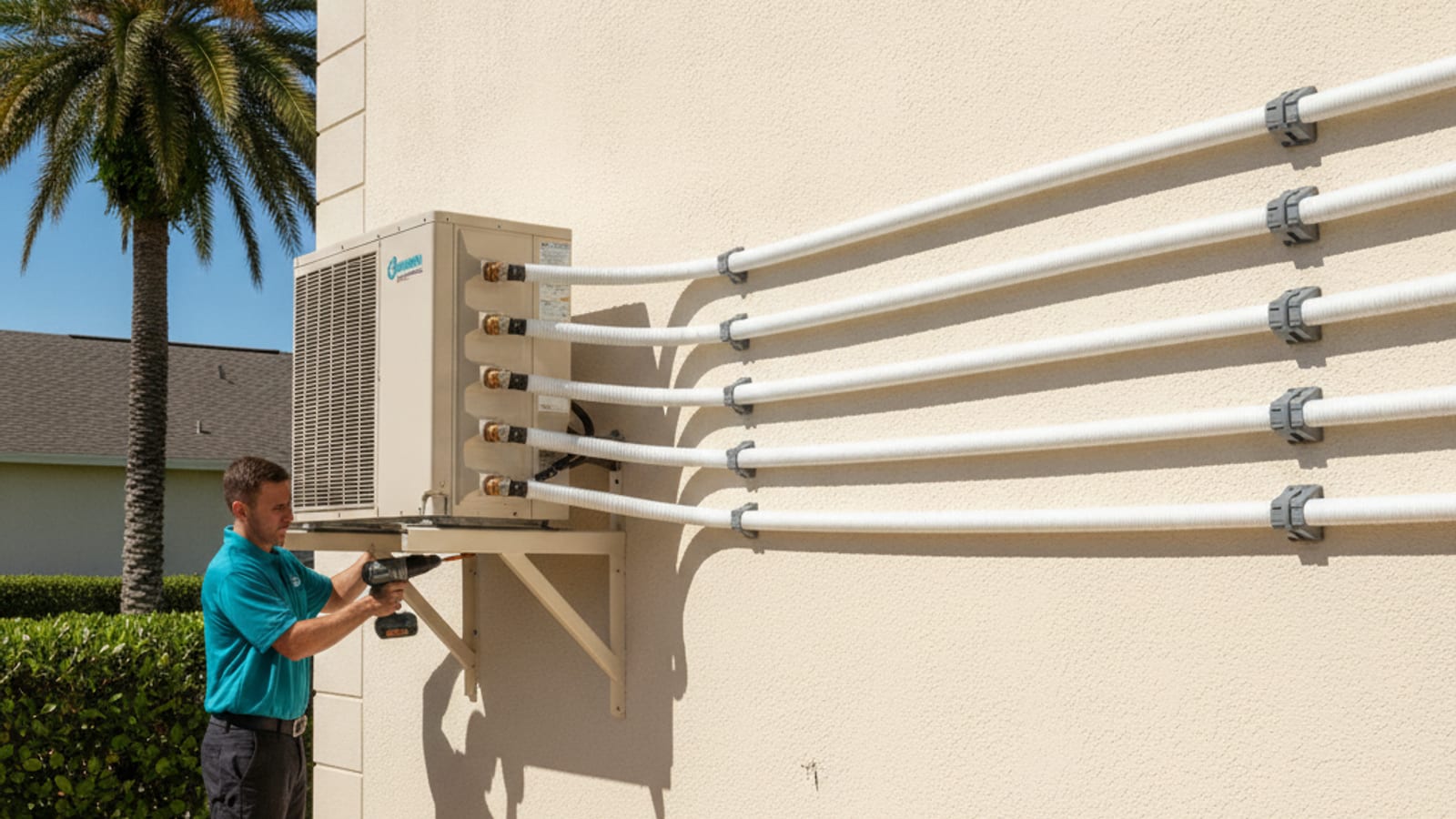
A single-zone mini split installation in Englewood runs $3,500 to $5,000. A multi-zone system covering several rooms off one outdoor unit runs $6,000 to $8,000. Zone count, line set length, and indoor head style are the main things that move a specific quote within that range.
Englewood Air Pro connects Sarasota and Charlotte county homeowners with local HVAC pros for mini split installation, with a free quote given after actually seeing the space rather than off a phone description.
What does a single-zone mini split cost?
A single-zone system, one outdoor compressor connected to one indoor unit, runs $3,500 to $5,000 installed. This is the right fit for a single room, a garage conversion, or a screened lanai that the main central system either doesn’t reach or wasn’t sized to cover, and it’s one of the most common upgrades homeowners ask about once a converted space starts getting real use. The price reflects the equipment tier, the length of the refrigerant line set between indoor and outdoor units, and whether the electrical circuit for the new unit already exists or needs to be added.
What does a multi-zone mini split cost?
A multi-zone system, multiple indoor heads connected to a single outdoor compressor, runs $6,000 to $8,000 covering two to eight rooms depending on the configuration and the total line set length across the property. It costs more than a single-zone system overall but less than installing several single-zone systems separately, since it consolidates the outdoor equipment down to one unit instead of cluttering the exterior of the property with several compressors.
Why does zone count change the price so much?
Each additional indoor head adds its own line set run, its own mounting labor, and its own electrical and condensate drainage work, so the price scales with the number of rooms being covered rather than staying flat. A two-zone system costs meaningfully less than a five-zone system covering an entire small cottage, even though both share one outdoor compressor. Homeowners on a tighter budget sometimes start with one or two zones and add more later, since mini split installation allows that kind of incremental rollout in a way a central system generally doesn’t. The outdoor compressor itself also has a capacity limit for how many indoor heads it can support, so a contractor should confirm that limit against your planned zone count before quoting, rather than after the equipment is already ordered.
Does indoor head style affect the price?
Somewhat. Wall-mounted heads are the standard, most cost-effective option. Ceiling cassette and floor console styles cost more to install because they involve more finish work and sometimes structural modification to mount correctly. Most Englewood installs use standard wall-mounted heads unless the room layout or a design preference calls for something else, such as a ceiling cassette in a room where wall space is limited by windows or built-ins.
Is a mini split cheaper than extending central ductwork?
Usually, yes, and often by a wide margin for older homes. A lot of Englewood and Placida’s pre-1960s cottages were never built with ductwork chases, and retrofitting central ducts into that kind of construction means opening walls or ceilings. Our post on mini splits for Englewood’s oldest cottages covers why that ductwork gap exists in this housing stock and how a mini split sidesteps it entirely without the structural disruption or cost of a full retrofit.
What else factors into a mini split quote?
WiFi control and app scheduling come standard on most systems we install, paired with the same kind of thermostat installation setup and walkthrough we do for central systems, which matters for seasonal homeowners who want to manage individual zones remotely while away for part of the year. A properly sized electrical disconnect and correctly routed condensate drainage, including a condensate pump where gravity drainage isn’t possible, are part of every quote rather than an add-on discovered mid-install. A mini split install is new equipment, so it needs a mechanical permit in both counties, and Florida’s new $7,500 no-permit rule doesn’t change that. For homes also dealing with indoor humidity beyond what one or two mini split zones cover, a whole-home indoor air quality upgrade is sometimes worth pricing alongside the mini split project.
Does installing a mini split near the coast cost more?
A little, and for the same reason it does with any outdoor HVAC equipment here. Homes near the Gulf, including barrier-island properties on Boca Grande and Palm Island, hold up longer with a coated outdoor unit given how fast standard equipment corrodes in salt air. Mini splits are common on those islands specifically, since a lot of the historic structures there can’t take new ductwork under local design restrictions, and a coastal-rated outdoor compressor adds a modest amount to the base price while meaningfully extending the equipment’s working life.
Is a mini split a good option for a whole small home, not just one room?
Yes, and it’s a common approach for a compact older cottage rather than just an addition or garage. A multi-zone system with three to five indoor heads can cover an entire small home’s worth of rooms off one outdoor compressor, at a total cost that often comes in close to what a central system replacement would run once ductwork work is factored in. The tradeoff is zone-by-zone control instead of one thermostat governing the whole house, which some homeowners actually prefer since it lets unused rooms run on a lower setting while occupied rooms stay fully comfortable, cutting down on wasted cooling in spaces nobody’s actually using that day.
Frequently asked questions
How much does a single-zone mini split cost installed?
A single-zone system runs $3,500 to $5,000 installed, covering one indoor unit connected to one outdoor compressor. The exact number depends on line set length, equipment tier, and whether new electrical work is needed.
How much does a multi-zone mini split cost?
Multi-zone systems covering two to eight rooms off one outdoor unit run $6,000 to $8,000, scaling with the number of indoor heads and the total line set length across the property.
Is a mini split cheaper than a full central AC replacement?
For a single room, a garage conversion, or an addition, yes, since a mini split avoids the cost of extending or building new ductwork. For cooling an entire home from scratch, a multi-zone mini split and a central system land in a similar overall cost range depending on the home’s layout.
Can I add more mini split zones later instead of doing them all at once?
Yes, this is one of the practical advantages of the system. A homeowner can start with one or two zones and add more as budget allows, room by room, rather than committing to a full-house installation upfront.
Do mini splits cost more to run than a central AC system?
Not typically. Modern mini splits are efficient, and because each zone is sized to the specific space it serves, the system often runs less wastefully than an oversized central unit that short-cycles instead of running a full, efficient cooling cycle.
How do I verify a mini split installer’s Florida license?
Check the contractor’s CAC (air conditioning contractor) license at myfloridalicense.com before any work begins. We connect Englewood homeowners with experienced, insured local HVAC pros, and it only takes a couple minutes to confirm.
If you’re weighing mini split options for a room, addition, or an older home without ductwork, call (941) 292-6250 and we’ll connect you with a local pro who can quote the job after seeing the space.