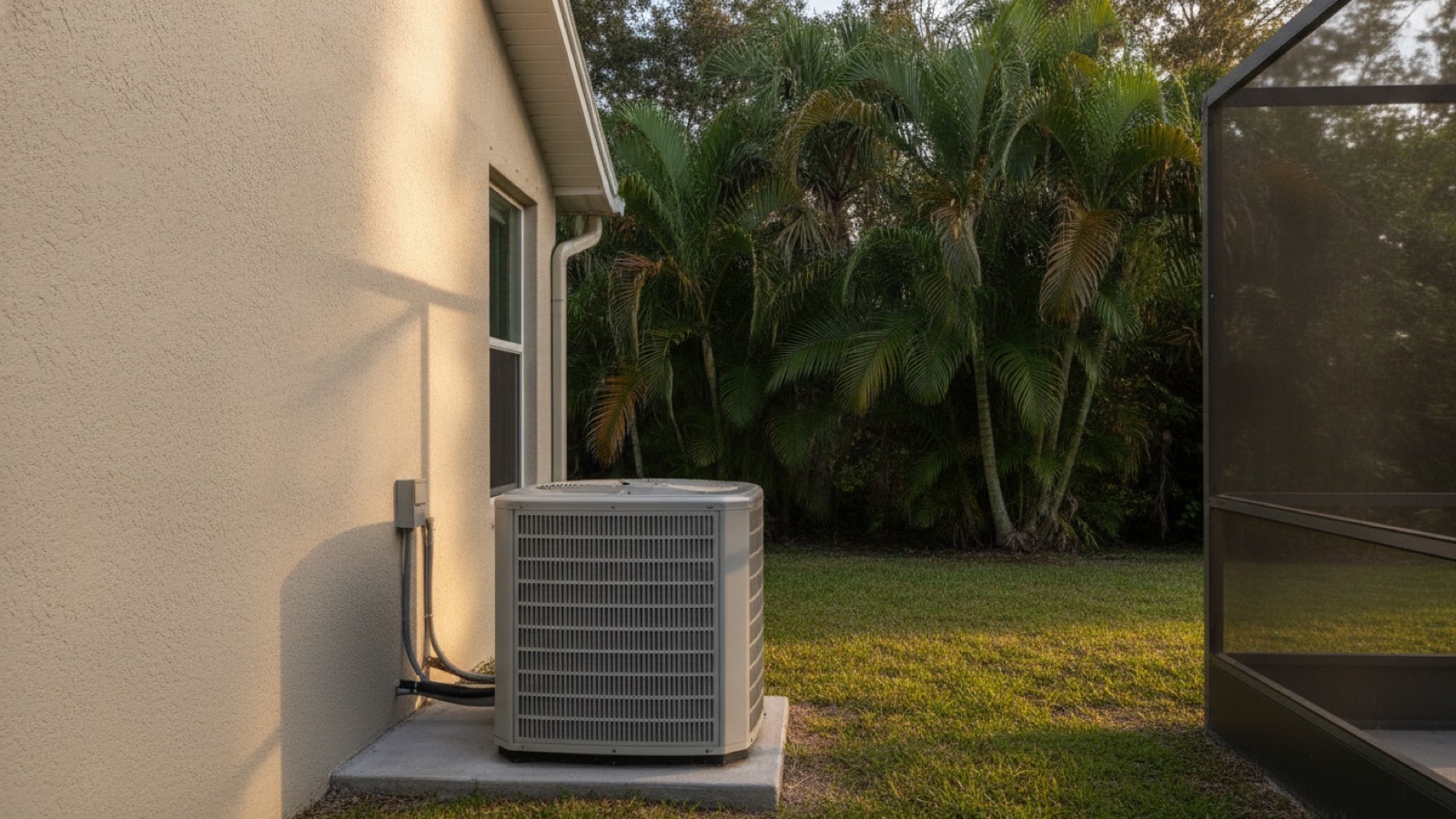
An oversized AC unit cools the air before it runs long enough to remove moisture, leaving a Florida home cold but clammy. Florida Building Code, Residential Section M1401.3, requires heating and cooling equipment to be sized from calculated building loads. The old system’s tonnage or square footage alone isn’t the answer.
What does an oversized AC unit do in an Englewood home?
An oversized AC unit reaches the thermostat setting too quickly. It shuts off before completing enough moisture removal for Gulf Coast conditions.
That pattern can leave the temperature comfortable while the house still feels damp. The system may then restart shortly afterward and repeat the same short cycle.
Short cycling means the equipment starts, runs briefly, and stops repeatedly. Besides leaving moisture behind, this operation is hard on the compressor. It can shorten the system’s service life when the underlying cause goes unaddressed.
Englewood’s hot-humid climate makes this problem especially noticeable. The air conditioner must handle temperature and moisture at the same time. A larger system isn’t automatically better when its capacity doesn’t match the house.
The problem can also affect an otherwise comfortable-looking replacement quote. A higher tonnage number may sound reassuring, but extra capacity isn’t a safety cushion. The correct size must follow the home’s calculated cooling load.
Homeowners comparing equipment can review our AC installation service before discussing system size with an assigned provider.
How can you tell whether your AC is oversized?
A cold but clammy house is the clearest warning sign. Frequent short cycles provide another reason to investigate the system’s size.
Those symptoms don’t prove oversizing by themselves. A bad thermostat sensor or refrigerant problem can also cause short cycling. A licensed HVAC contractor should inspect the system and compare its capacity with a house-specific load calculation.
Use this simple framework when describing the problem:
- If the house cools quickly but stays clammy, investigate oversizing.
- If the system starts and stops repeatedly, request a complete diagnosis.
- If it runs constantly without catching up, it may be undersized.
- If the pattern started suddenly, don’t assume the original sizing changed.
The third situation is the opposite sizing problem. An undersized system can run constantly and still struggle during hot weather.
The fourth situation matters because existing equipment doesn’t suddenly gain capacity. A new cycling problem can point toward another repair issue. Our AC repair service covers diagnosis when the cause isn’t clear.
The dependable answer comes from comparing calculated loads with the equipment’s published capacity. Comfort symptoms begin the conversation, but they shouldn’t select the replacement.
What does the Florida Building Code require for AC sizing?
Florida’s residential code requires calculated sizing, not a rule-of-thumb guess. Section M1401.3 states, “Heating and cooling equipment and appliances shall be sized in accordance with ACCA Manual S or other approved sizing methodologies based on building loads calculated in accordance with ACCA Manual J or other approved heating and cooling calculation methodologies.”
The rule names both equipment sizing and building-load calculation. That distinction prevents a contractor from choosing equipment based only on square footage or the previous unit’s label.
The section also contains specific exceptions. Those exceptions don’t turn larger equipment into the default choice. Each depends on calculated loads and the manufacturer’s published capacities.
Englewood itself crosses two counties. ZIP 34223 sits on the Sarasota County side, while ZIP 34224 and Grove City sit in Charlotte County. Our Englewood AC permit guide explains that local split without replacing advice from the assigned contractor.
Charlotte County’s guide for permitting a new single-family residence asks for two signed sets of energy calculations, including Manual J. That instruction applies to new single-family residences. For a replacement, ask the contractor what your county requires for that specific job.
Why does the code separate total and sensible heat gain?
The code separates them because temperature isn’t the entire cooling job. Sensible heat gain describes the temperature load. Total heat gain also accounts for the moisture the system must remove.
That difference matters along the Gulf Coast. An AC can satisfy the thermostat while leaving too much moisture indoors. The result is a house that feels cool and sticky at the same time.
An oversized system causes that result when it cools quickly and shuts down. It doesn’t run long enough to pull sufficient moisture from the air.
This is also why an AC sizing calculator can’t settle the question by itself. A square-footage estimate doesn’t replace the building loads required by Section M1401.3. The calculation must address the specific home rather than a generic house of similar size.
If the current system is correctly sized or slightly oversized and moisture remains, separate humidity control may help. Our guide to whole-home dehumidifiers in Englewood covers that decision. The indoor air quality service page explains the available system types.
A dehumidifier shouldn’t become a substitute for checking replacement size. Equipment selection and moisture control are related decisions, but they solve different parts of the problem.
When does Florida code allow a bigger AC system?
A larger standard size is allowed only under the code’s listed conditions. Going up a size isn’t the automatic answer when the preferred capacity isn’t available.
One exception covers multistage or variable refrigerant flow equipment. The calculated loads must remain within the manufacturer’s published capacity range for that equipment. That’s the same equipment class that makes HVAC zoning workable, since a single-stage unit has only one output to give.
The other exception applies when available published capacities can’t satisfy both total and sensible heat gains. In that case, the next larger standard size may be specified.
That wording creates a clear decision order:
- Calculate the home’s building loads.
- Match equipment using the approved sizing method.
- Check the manufacturer’s published capacity range.
- Apply an exception only when its conditions fit.
It doesn’t support carrying forward old tonnage without checking the house. It also doesn’t establish an acceptable oversizing percentage.
What changes when a contractor runs a load calculation?
A load calculation replaces assumptions with a house-specific sizing basis. It shows whether the proposed equipment matches the building’s heat and humidity loads.
That matters across the local service area. Some South Venice homes received whatever tonnage was standard decades ago instead of equipment sized for the individual house. Laurel homes can also carry systems that were mismatched from their original installation.
In fast-built North Port subdivisions, builder-grade equipment may reflect a general specification rather than the home’s humidity load. A fresh calculation gives the replacement quote a specific foundation.
Homeowners can review service details for Englewood, South Venice, and North Port before requesting quotes.
Equipment cost shouldn’t determine capacity. A standard split system runs $5,500-$8,500, while higher-efficiency variable-speed equipment runs $9,000-$12,000. The assigned provider’s written quote is the authoritative price for the work.
Our Englewood AC replacement cost guide covers those price choices separately. Homeowners comparing heat-pump equipment can use the heat pump cost guide without treating price as a sizing method.
What should you ask for before approving a replacement?
Ask for the written load calculation before choosing the equipment. Then ask how the proposed model matches the calculated total and sensible heat gains.
Use these questions during the quote:
- What calculated load did you get for this house?
- Which approved sizing method did you use?
- How does this model match the calculated loads?
- Are you carrying forward the old system’s tonnage?
- If you selected the next larger size, which exception applies?
- Which county requirements apply to this property’s ZIP code?
The answers should connect the house, calculation, and equipment. A recommendation based only on square footage or old tonnage leaves that connection missing.
Florida requires a CAC license for HVAC work. Verify the contractor’s license at myfloridalicense.com before accepting the job. Englewood Air Pro is a referral service, not the contractor performing the work.
Frequently asked questions
Can an oversized AC unit make my home feel humid?
Yes. An oversized AC unit can cool the air quickly and shut off before removing enough moisture. That pattern leaves a Gulf Coast home feeling cold but clammy.
How do I know whether my current AC is oversized?
Request a house-specific load calculation and compare it with the equipment’s capacity. Short cycling and a clammy interior are warning signs, but they aren’t proof by themselves.
Does Florida code require a Manual J calculation?
Section M1401.3 requires sizing under Manual S or another approved method, based on loads calculated under Manual J or another approved calculation method.
Should my replacement AC have the same tonnage as the old system?
Not automatically. The old equipment may never have matched the house correctly. Ask for a current load calculation before carrying its tonnage into the replacement quote.
Can a contractor install the next larger standard size?
Yes, but only when the code’s exception conditions apply. One condition covers equipment whose published capacities can’t satisfy both calculated total and sensible heat gains.
Will a whole-home dehumidifier fix an oversized AC?
It can address indoor moisture, but it doesn’t prove the AC is correctly sized. Check the system against a load calculation before treating separate humidity control as the complete answer.
Get the proposed AC size in writing
A replacement quote should identify more than equipment and price. It should show the calculated load, the selected capacity, and the reason they match.
Englewood Air Pro connects homeowners with licensed and insured local HVAC contractors. The assigned provider sets availability, pricing, warranties, and service terms.
Call (941) 292-6250 to request a connection for AC sizing, replacement, or diagnosis.