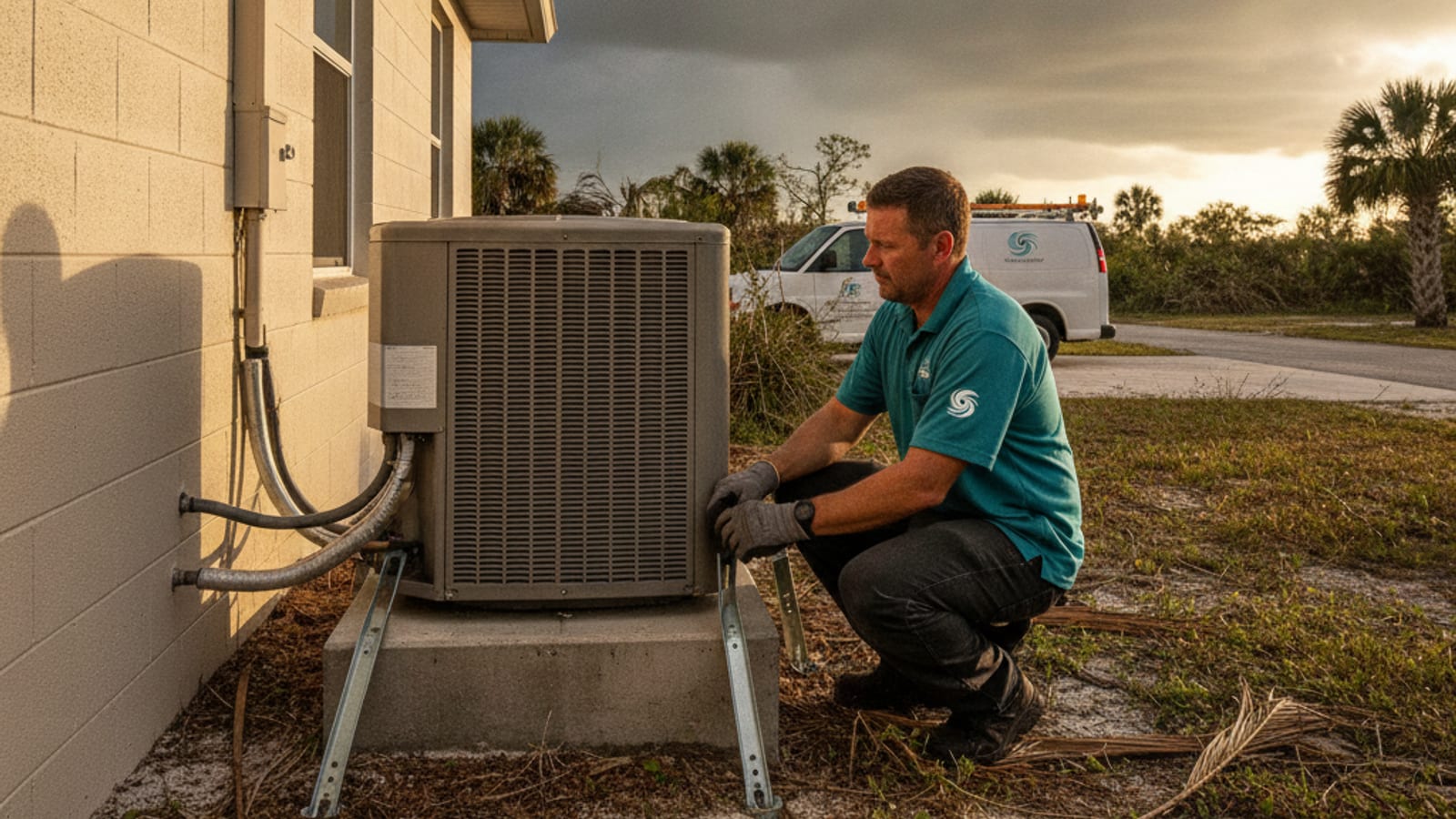
The first walk-through of your property after a storm passes through Charlotte or Sarasota County usually focuses on the roof, windows, and any obvious structural damage. The outdoor AC condenser gets checked last, if at all, even though it’s sitting outside taking the same wind, debris, and water exposure as everything else on the property.
Do a visual check before you power anything back on
Before restoring power to the AC system, walk out to the outdoor unit and look, don’t touch, don’t power it on yet. Check for visible physical damage: dented or bent cabinet panels, debris lodged in the fan or coil, standing water inside or immediately around the unit, and anything that looks disconnected or displaced from where it should be mounted. If the unit shifted from its pad or tie-down points, or if you see exposed wiring, don’t attempt to power it up until a professional has confirmed it’s safe.
This visual check takes a few minutes and it’s something any homeowner can reasonably do themselves. What comes next, actually diagnosing internal damage, is where a DIY check should stop and a professional evaluation should start.
Tie-down checks matter more here than most places realize
Outdoor condensers in hurricane-prone areas are typically secured with tie-down straps or brackets anchoring the unit to its pad, specifically to prevent it from shifting or tipping in high winds. After any significant storm, check whether those tie-downs are still intact and the unit hasn’t shifted position, even slightly. A unit that’s moved off true level, even by a small amount, can develop internal component stress or refrigerant line strain that isn’t obvious from a quick glance but causes problems down the line.
If your system doesn’t currently have proper tie-down anchoring, and plenty of older installs across Port Charlotte and greater Charlotte County predate current best practices, this is worth addressing during any post-storm AC repair visit rather than treating it as a separate future project.
Surge damage: the failure you can’t see from outside
Electrical surge damage from storm-related power fluctuations is one of the most common causes of AC failure that looks completely fine from the outside. A surge can damage a compressor’s electrical components, a control board, or capacitors without any visible external sign. This is exactly why a system that looks physically undamaged can still fail to start, or start and then trip out, once power is restored. Restoring cooling from backup power raises its own questions, and the guide to a generator to run AC covers the startup load and the transfer switch side of that.
If your AC won’t start after a storm and you don’t see obvious physical damage, surge damage to internal electrical components is a likely cause, and it needs a technician with diagnostic equipment to confirm, not a visual inspection. Attempting to force a system to run when there’s underlying electrical damage risks turning a repairable component failure into a full compressor replacement.
When to call versus when a DIY check is enough
A DIY visual check is appropriate for confirming there’s no obvious external damage, debris, or displacement before you consider restoring power. It is not appropriate for diagnosing whether it’s safe to actually run the system, testing electrical components, or evaluating refrigerant charge after a storm. If your visual check turns up anything questionable, water inside the unit, a shifted or tipped condenser, visible wiring damage, or the system simply not starting once power is back, that’s the point to call for a professional emergency HVAC evaluation rather than continuing to troubleshoot on your own.
Given how directly Charlotte and Sarasota counties sit in Gulf hurricane paths, having a contractor relationship established before storm season, rather than searching for one during an active post-storm emergency, makes a real difference in how fast you can get evaluated when a major system is out.
What this looks like differently across the metro
Coastal and canal-front properties, particularly around Punta Gorda Isles and along the harbor, face the added risk of storm surge and saltwater intrusion on top of standard wind and debris exposure. A condenser that took any saltwater contact during a storm needs evaluation even if it otherwise looks physically fine, since saltwater exposure accelerates corrosion in ways that aren’t visible immediately. Homes further inland in North Port generally face less surge risk but still deal with the same wind, debris, and electrical surge exposure as the rest of the metro.
Barrier-island properties on Manasota Key, Boca Grande, and Palm Island carry the highest combined risk, full surge and salt exposure plus potential access delays if a causeway or ferry is temporarily out of service, which is worth factoring into how quickly you can realistically expect a post-storm evaluation on those properties.
Documenting damage for an insurance claim
If your AC took visible damage or won’t restart after a storm, document everything before repair work begins, not after. Photograph the outdoor unit from multiple angles, including any debris, displacement, standing water, or visible corrosion. Note the date and, if you have it, roughly when during the storm you noticed the system stop working. This documentation matters most when the AC damage is part of a broader storm claim alongside roof or exterior damage, since adjusters reviewing a bundled claim appreciate clear, dated evidence for each affected system rather than a general description after repairs are already underway.
Keep the technician’s diagnostic report and any parts replaced as part of your claim file too. A repair invoice that specifically documents storm-related failure, surge damage to a control board, for example, rather than a generic description of the work performed, gives your insurer a clearer basis for approving the claim.
Building a pre-storm emergency plan before the next season
The best time to prepare for post-storm AC issues is before hurricane season starts, not after a storm has already passed. Confirm your outdoor unit has proper tie-down anchoring well ahead of June, and address it as routine maintenance rather than an emergency repair if it doesn’t. Save contact information for a trusted HVAC contractor before you need one urgently, since response times during an active post-storm period across the metro get stretched thin when many homeowners are calling at once.
If you’re in a flood-prone area, particularly canal-front or barrier-island properties, confirm your outdoor unit’s elevation and placement account for realistic storm-surge risk for your specific property, a conversation worth having with a contractor during a routine pre-season tune-up rather than waiting until storm damage has already happened.
Verify credentials before letting anyone touch storm-damaged equipment
Post-storm periods unfortunately attract unlicensed or out-of-state contractors looking to capitalize on urgent repair demand. Before hiring anyone for post-storm AC work, verify their CAC license directly at myfloridalicense.com. This matters especially for storm-damaged equipment tied to an insurance claim, where documentation from an unlicensed contractor may not satisfy your insurer’s requirements and could complicate your claim.
A simple post-storm sequence to follow
Check the outdoor unit visually for physical damage, displacement, or standing water before restoring power. Confirm tie-downs and pad positioning are intact. If everything looks physically sound, restore power and watch closely for whether the system starts normally. If it doesn’t start, trips out, or you noticed anything questionable during the visual check, call for a professional evaluation rather than repeatedly cycling power in an attempt to force it to run.
Is it safe to turn my AC back on myself after a storm?
Only after a careful visual check confirms no physical damage, displacement, or standing water around the unit. If anything looks off, or if the system doesn’t start normally once power is restored, stop and call for a professional evaluation rather than continuing to try to force it.
How do I know if my AC has surge damage from a storm?
Surge damage often isn’t visible from the outside. A system that looks physically fine but won’t start, or starts and then trips out, after power is restored is a common sign of surge damage to internal electrical components that needs professional diagnosis.
Should I check my AC’s tie-downs after every storm, or just major hurricanes?
Any storm with sustained high winds is worth a quick tie-down and positioning check. Major hurricanes warrant a more thorough inspection, since sustained hurricane-force winds are far more likely to shift or stress a unit than a routine summer storm.
Can saltwater exposure damage my AC even if it looks undamaged afterward?
Yes. Saltwater contact accelerates corrosion in ways that aren’t visible right away. Any condenser that took storm surge or saltwater spray during a storm should be evaluated even if it appears to be running normally afterward.
If your AC took damage or won’t start after a storm anywhere in Charlotte or Sarasota County, call (941) 292-6250 and we’ll connect you with a local pro for emergency evaluation.