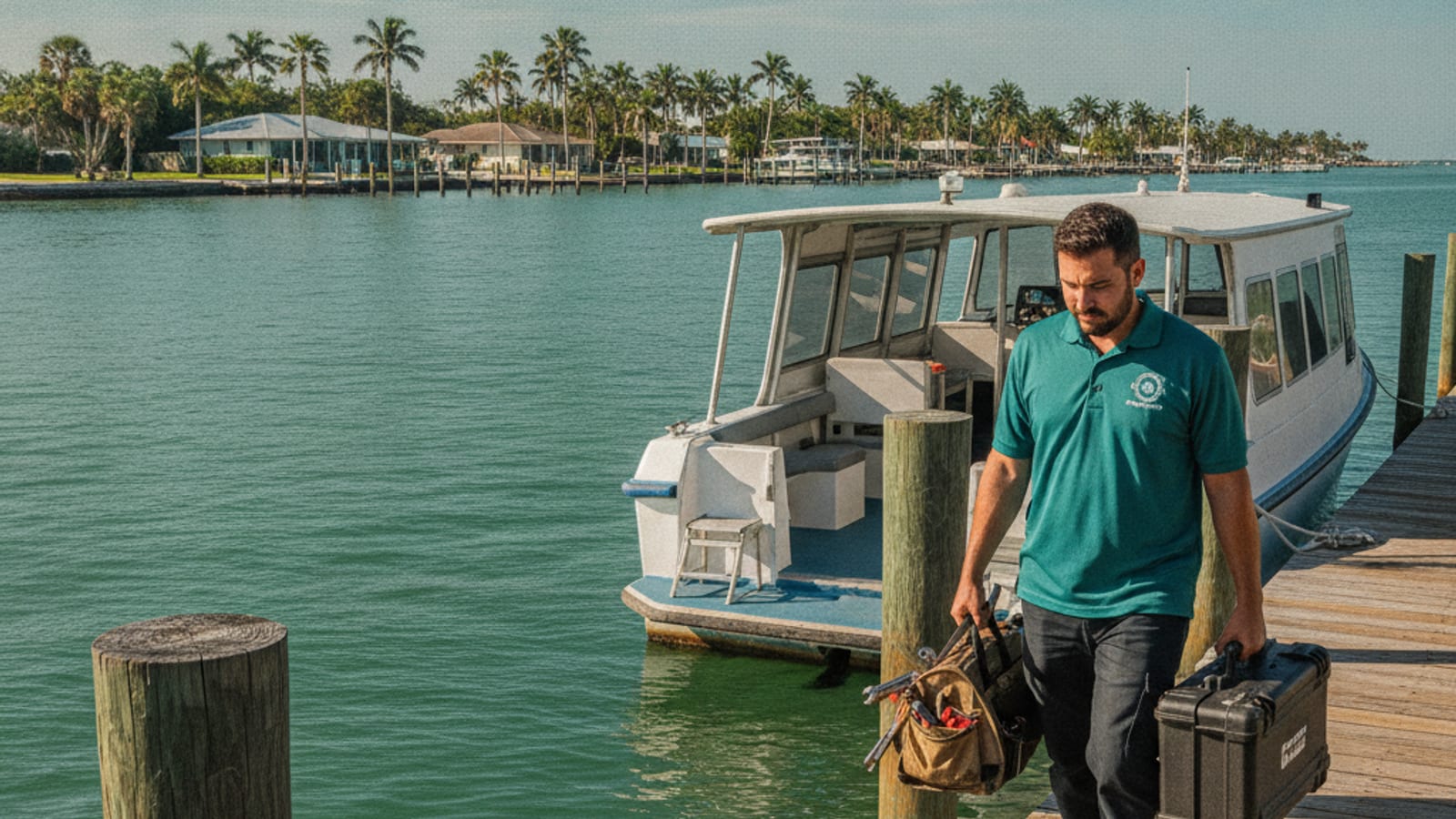
An HVAC service call on Boca Grande or Palm Island isn’t the same logistics as a service call in mainland Port Charlotte. One of these islands has a causeway, the other only a short car ferry, and both realities shape how far in advance you should call, how a technician plans the visit, and what a realistic response time actually looks like.
Boca Grande: causeway access, but still an island mindset
Boca Grande sits on Gasparilla Island, technically within Lee County but reached from this metro’s mainland by the Placida/Cape Haze causeway. The causeway means a technician can drive straight there without ferry timing, which is a real advantage over Palm Island’s logistics. But Boca Grande carries its own service expectations that come with its housing stock: extremely affluent, historic and newer luxury waterfront estates with strict architectural and access requirements.
A lot of Boca Grande properties are seasonal, occupied during the winter social season and closed up for stretches the rest of the year, similar to the snowbird pattern across the broader metro but with a more concentrated, high-end version of it. That seasonal pattern means service scheduling often has to work around property managers, caretakers, or gate access arrangements rather than a homeowner simply being present to let a tech in. Building a relationship with a property’s regular caretaker or management company tends to make AC repair scheduling here considerably smoother than treating each visit as a one-off.
Palm Island: the ferry changes everything
Palm Island, also known as Don Pedro Island, is genuinely different. There’s no bridge. Access is by a roughly three-minute car ferry from Placida, running on a set schedule rather than continuously. An HVAC technician heading to Palm Island has to plan the entire visit, including any parts run back to the mainland if something unexpected comes up, around ferry departure times, not around their own preferred schedule.
This matters most for emergency calls. A same-day emergency HVAC response on the mainland might mean a tech arriving within an hour or two. On Palm Island, the same call means factoring in the drive to Placida, the ferry crossing, and the return trip if a part needs to be sourced off-island. Homeowners and vacation-rental managers here benefit from having a contractor already familiar with the ferry schedule and island logistics rather than someone figuring it out for the first time during an actual emergency.
Vacation-rental turnover on Palm Island
A meaningful share of Palm Island’s housing is short-term vacation rental, with a golf-cart-and-boat lifestyle and minimal car traffic on the island itself. That rental turnover creates a specific HVAC service pattern: a system needs to be reliably cooling and dehumidifying between every guest changeover, since a broken AC discovered by an arriving renter is a far bigger problem than the same failure in an owner-occupied home where there’s more flexibility on timing.
Property managers running rentals on Palm Island benefit from a proactive maintenance schedule rather than waiting for a failure to surface mid-booking. Building slack into the turnover calendar for a quick pre-arrival system check, especially during peak humidity months, catches small issues before they become a guest complaint and a rushed ferry-dependent emergency call.
Severe salt-air corrosion drives frequent equipment turnover
Both islands sit in full Gulf exposure, which means the salt-air corrosion problem covered elsewhere in this metro’s HVAC content applies here at its most extreme. Equipment on Boca Grande and Palm Island corrodes faster than almost anywhere else in the region, and coastal-rated equipment isn’t optional here the way it might be a judgment call a mile or two inland. Budgeting for shorter equipment life cycles and more frequent coil inspections is realistic planning for either island, not overcaution.
Generator-paired systems for storm-isolated homes
Barrier islands face the most severe isolation risk during and after a storm. A causeway can flood or close, and a ferry can’t run in dangerous conditions, which means Boca Grande and Palm Island homes can be cut off from mainland service access for longer stretches than a mainland property would experience after the same storm. This isolation risk is part of why generator-paired HVAC systems, discussed in more depth in our post on post-Ian AC replacement trends across this metro, show up more often on island properties than on comparable mainland homes.
A system paired with adequate generator capacity keeps a home livable through an extended outage where island isolation might delay both utility restoration and any HVAC service response by days rather than hours.
Tarpon season and the calendar that shapes island demand
Boca Grande’s identity as the tarpon-fishing capital brings a seasonal rhythm that affects HVAC scheduling beyond just the winter social season. The spring tarpon run draws anglers and boat traffic to the pass, and rental and second-home activity on both islands often peaks alongside it, overlapping with the tail end of the snowbird season before the summer quiet period sets in. A contractor familiar with this calendar plans routine maintenance visits for the shoulder periods, generally late spring after the tarpon crowds thin and before peak summer humidity load hits, rather than competing for scheduling slots during the busiest weeks.
Homeowners and property managers who work backward from this calendar tend to get more flexible scheduling and avoid the compressed response times that come with everyone needing service at once during peak season.
Cost expectations for island versus mainland service
Service calls on Boca Grande and Palm Island typically carry a modest premium over comparable mainland work, reflecting the real added time for causeway or ferry logistics rather than the actual repair or installation work itself. That premium is worth understanding upfront rather than being surprised by it mid-project. Ask any contractor quoting island work to break out what portion of the estimate reflects travel and ferry logistics versus the HVAC work itself, since that transparency makes it easier to compare quotes fairly against mainland pricing you might see referenced elsewhere.
For larger projects, like a full system replacement rather than a routine repair, the added logistics cost becomes a smaller percentage of the total project, which is part of why island homeowners planning a major replacement benefit from bundling as much of the scope as possible into a single scheduled visit rather than spreading it across multiple trips.
This bundling logic applies equally well to routine maintenance. Rather than scheduling a single annual tune-up and calling separately whenever a small issue crops up, island property owners often save on both cost and disruption by having a contractor address several smaller items during one planned visit, coordinated around a single causeway trip or ferry crossing instead of three or four separate ones spread across the year.
Coordinating with other trades on island projects
Any larger renovation or storm-repair project on Boca Grande or Palm Island usually involves multiple trades working in some sequence, roofing, electrical, and HVAC among them. Given the added logistics both islands carry, it’s worth asking your general contractor or project manager to sequence HVAC work deliberately rather than leaving it to be scheduled independently. A tech who has to make a separate ferry trip because HVAC work wasn’t coordinated with the rest of a project’s timeline adds real cost and delay that better planning avoids entirely.
Planning ahead for island service
For any non-emergency work on either island, whether that’s a scheduled AC tune-up or a full system replacement, plan further ahead than you would on the mainland. Confirm ferry or causeway access windows with your contractor before locking in a date, and if you’re managing a seasonal or rental property, make sure whoever has property access knows the scheduled visit is coming.
How long does an HVAC service call take on Palm Island compared to the mainland?
Longer, mainly due to the ferry schedule rather than the repair itself. Factor in the drive to Placida, the crossing time, and a potential return trip if parts need to be sourced off-island, especially for anything beyond a routine visit.
Is Boca Grande harder to service than mainland Charlotte County?
Access itself is straightforward since the causeway allows a direct drive, but the island’s seasonal occupancy pattern and high-end estate access requirements mean scheduling often depends on coordinating with a caretaker or property manager rather than the homeowner directly.
Should vacation rental owners on Palm Island have a maintenance plan?
Yes. A proactive schedule that includes pre-arrival system checks catches issues before a guest discovers a broken AC mid-stay, which is a far more disruptive problem than the same issue caught during a routine visit between bookings.
Why is generator backup more common on island HVAC systems?
Islands face longer isolation risk after a storm, since a causeway can flood or close and a ferry can’t run in dangerous conditions. That extended isolation makes generator-paired systems a more practical investment here than on a comparable mainland property.
If you own or manage a property on Boca Grande or Palm Island, call (941) 292-6250 and we’ll connect you with a local HVAC pro who already understands the ferry schedule and island access logistics.