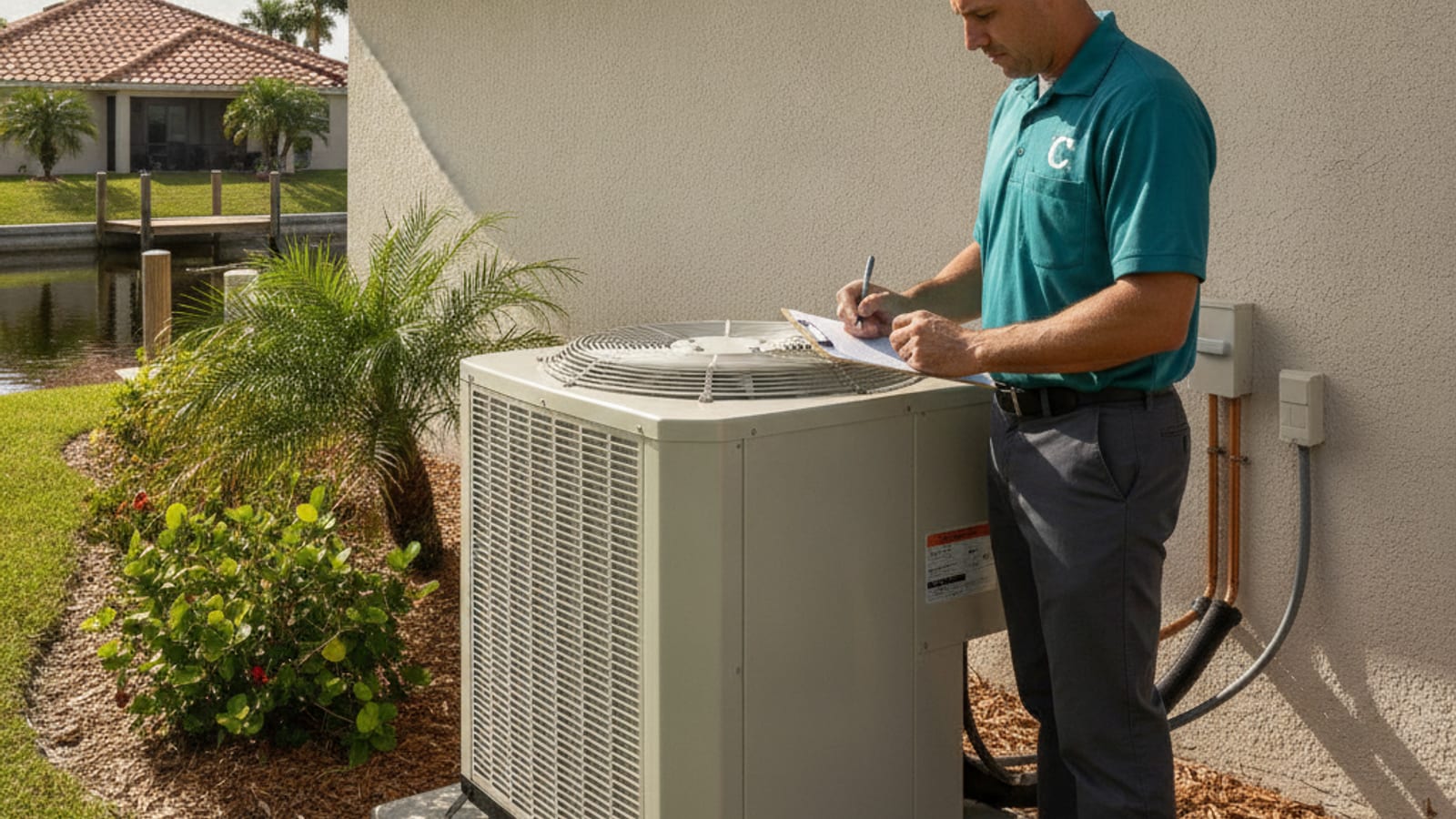
Florida homeowners insurance carriers require a 4-point inspection on older homes, and it catches a lot of Englewood-area owners off guard the first time an inspector flags their AC system. Understanding what actually triggers a flag, and what fixes it, turns a stressful renewal surprise into a straightforward maintenance decision.
What a 4-point inspection actually checks
The inspection covers four systems: roof, electrical, plumbing, and HVAC. For HVAC specifically, an inspector documents the age of the system, its general condition, and any visible signs of deferred maintenance or damage. This isn’t a full diagnostic like a technician would perform during a service call, it’s a documentation exercise that gives the insurer a snapshot of the home’s major systems at a point in time.
Insurers use this documentation to assess risk on a policy, particularly for homes over a certain age, commonly 15 to 30 years depending on the carrier. An AC system that’s clearly at or past its expected service life, or one showing visible neglect, represents a higher likelihood of a future claim, which is why it draws inspector attention.
What actually gets flagged
A handful of specific conditions show up repeatedly on flagged Englewood-area inspections. Visible rust or corrosion at the outdoor condenser’s base pan is common in this coastal market, especially on homes near the Gulf or Charlotte Harbor where salt air accelerates the process. Missing or damaged cabinet panels on the outdoor unit, obsolete refrigerant types still in use on very old equipment, and a system that’s clearly well past typical service life, generally somewhere past fifteen to twenty years, all draw scrutiny.
Visible water staining or damage around the indoor air handler, evidence of a past drain pan overflow, and duct connections that look poorly maintained can also get noted, though HVAC inspection depth varies somewhat by inspector and carrier. None of these individually guarantees a coverage problem, but they document a pattern the insurer factors into renewal terms.
How the flag connects back to Hurricane Ian
A meaningful share of flagged systems in this metro trace back to the same root cause covered in our post on post-Ian AC replacement patterns: equipment that took storm exposure in 2022 and has been slowly deteriorating since, sometimes without an obvious symptom until an inspector documents visible corrosion or wear. For homeowners in Punta Gorda or along the harbor where storm surge hit hardest, a flagged 4-point inspection is often the first formal documentation that a system’s condition has quietly declined since the storm.
How a documented repair or new install clears a flag
Clearing a flagged item usually comes down to documentation. A professional repair addressing the specific issue the inspector noted, paired with an invoice and description of the work performed, is often enough to satisfy a carrier for a repairable issue. For a system that’s genuinely past its service life or has damage beyond reasonable repair, a full AC installation with proper documentation, permits where required, and manufacturer information for the new equipment clears the flag definitively and can improve renewal terms going forward.
Keep every piece of paperwork from the work: the invoice, any permit documentation, and ideally photos of the completed work. Insurers sometimes ask for this directly, and having it organized makes the renewal process considerably smoother than scrambling to track down records after the fact.
Regular maintenance as flag prevention
A system that’s been on a consistent maintenance schedule rarely gets flagged for the same reasons a neglected system does. Routine tune-ups that catch and address minor corrosion, clean coils, and confirm proper drain function before they become visible problems keep a system looking, and actually being, well-maintained when an inspector eventually walks through. This is a case where the maintenance cost pays for itself partly through avoided flagging headaches at renewal time, not just through better system performance.
What confirm-at-quote framing means for any efficiency program
If a flagged inspection pushes you toward a new install, you may hear about FPL efficiency programs or incentives during the quote process. Treat any mentioned program or rebate as something to confirm directly with FPL and your contractor at the time of your specific quote, not as a guaranteed dollar figure. Utility programs change eligibility requirements and available funding regularly, and what applied to a neighbor’s install last year may not apply to yours today. A contractor quoting your project should be willing to walk through current program details specifically, not just reference a program in general terms.
How a 4-point inspection differs from a wind mitigation inspection
Florida homeowners sometimes conflate the 4-point inspection with a wind mitigation inspection, since both are commonly ordered around the same time during a policy renewal or new purchase. They’re distinct evaluations. A wind mitigation inspection documents structural storm-resistance features, roof shape, opening protection, roof-to-wall connections, and generally doesn’t touch HVAC at all. The 4-point inspection is the one that actually reviews your AC system’s age and condition alongside roof, electrical, and plumbing.
Understanding the difference matters when you’re scheduling inspections or reviewing results, since a clean wind mitigation report says nothing about whether your HVAC system passed its own review. If you’re only seeing one report and assuming it covers both, confirm with your insurance agent exactly which inspections were performed and what each one actually assessed.
Realistic timelines from flag to resolution
Once an inspection flags an HVAC item, most carriers give homeowners a defined window, often 30 to 60 days depending on the policy, to address it before it affects coverage or renewal terms. That timeline sounds workable until you factor in scheduling a contractor, getting a diagnosis, waiting on any needed parts, and completing the actual repair or replacement work, especially during peak summer season when HVAC companies across the metro are running at capacity.
Don’t wait until close to the deadline to start the process. Contact your insurer as soon as you receive a flagged inspection report to confirm the exact timeline and what documentation they’ll need, then get a contractor scheduled promptly. Homeowners who start early generally have more flexibility on scheduling and contractor choice than those who wait until the deadline is close and are stuck taking whatever appointment slot is available.
Peak summer months are the tightest window for scheduling in this metro, since routine tune-up demand and emergency repair calls both spike alongside the season’s heaviest cooling load. If your inspection lands in that stretch, mention the insurance deadline explicitly when you call for an appointment. Most reputable contractors will prioritize a job with a hard insurance timeline over a routine, non-urgent request, but only if they know the deadline exists upfront.
What to do if you get flagged
Don’t panic, and don’t assume a flag means an immediate coverage cancellation. Get a professional assessment of the specific issue the inspector noted, find out whether it’s a repairable item or something that genuinely warrants replacement, and get the work done with proper documentation. Send that documentation to your insurer promptly, since most carriers have a defined window to resolve a flagged item before it affects your policy.
Always verify a contractor’s CAC license directly at myfloridalicense.com before hiring anyone for inspection-related repair work, since documentation from an unlicensed job may not satisfy your insurer’s requirements.
What happens if my AC gets flagged on a 4-point inspection and I don’t fix it?
Depending on the carrier and the severity of the flagged item, an unresolved flag can affect renewal terms, increase premiums, or in some cases affect coverage eligibility. Most insurers give homeowners a window to address a flagged item before it impacts the policy.
How old does an AC system have to be to get flagged on inspection?
There’s no universal age cutoff, it varies by carrier, but systems approaching or past fifteen to twenty years old draw more scrutiny, especially if there’s also visible corrosion or damage present.
Does replacing my AC after a flag guarantee lower insurance premiums?
Not automatically, but documented replacement of a flagged system generally improves how the insurer assesses the home’s overall risk profile, which can positively affect renewal terms depending on the carrier and policy.
Can routine maintenance prevent my AC from being flagged?
Yes, in most cases. A system on a consistent maintenance schedule that addresses minor issues like early corrosion or drain problems before they become visible rarely triggers the same flags a visibly neglected system does.
If your AC got flagged on a recent 4-point inspection or you want it evaluated before your next renewal, call (941) 292-6250 and we’ll connect you with a local HVAC pro who can document exactly what’s needed to clear it.