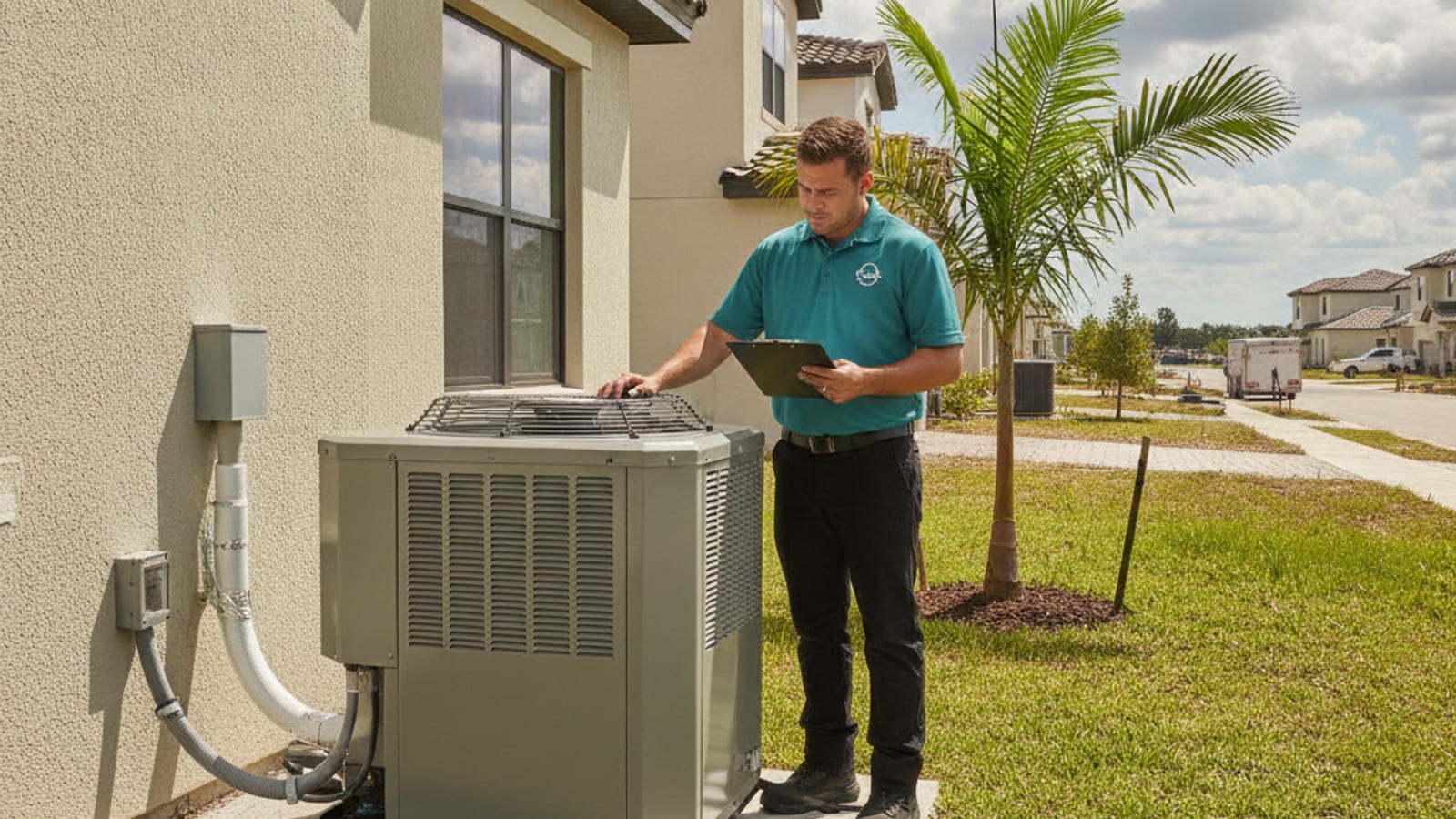
Wellen Park has ranked among the fastest-growing master-planned communities in the country, and the growth shows in North Port’s HVAC market too. Buyers closing on a new build here are dealing with a different set of questions than someone replacing a thirty-year-old system on an established Port Charlotte lot, and a lot of that difference comes down to what a builder’s HVAC package actually includes versus what it doesn’t.
What the builder warranty actually covers
Most new-construction HVAC systems in Wellen Park and greater North Port come with a builder-arranged warranty covering parts and sometimes labor for a defined period, often one year for general workmanship and longer on major components through the manufacturer. The gap buyers run into is scope. A builder warranty typically covers defects and equipment failure, not comfort complaints like uneven cooling between rooms or a system that runs constantly without hitting the set temperature. New construction here is also where HVAC zoning tends to be designed in from the start rather than retrofitted later.
Read the actual warranty document before closing, not just the sales summary. Ask specifically what triggers a service call under warranty versus what counts as a homeowner-requested adjustment outside its scope. A surprising number of Wellen Park buyers discover mid-way through their first summer that a comfort issue they assumed was covered actually falls outside the warranty’s technical definition of a defect.
Right-sizing for new-build homes in a fast-growing district
New construction in Wellen Park generally uses more efficient building envelopes than the area’s older housing stock, better insulation, tighter window seals, more consistent construction quality. That efficiency changes the sizing math for AC equipment. A system sized using older rules of thumb can end up oversized for a tightly built new home, and an oversized system cools too fast without running long enough to properly dehumidify the air, leaving a house that reads cool on the thermostat but feels clammy.
This is a common issue specific to rapidly built master-planned districts, where equipment sizing sometimes gets standardized across floor plans rather than calculated per home. If you’re buying new construction, ask whether the HVAC contractor performed an actual load calculation for your specific home’s orientation, window placement, and square footage, or whether the system size was assigned based on a standard package for that floor plan model. The difference matters more in Florida’s humidity than it would in a drier climate.
Heat pump efficiency choices for first-time buyers
Most new construction across North Port and Wellen Park ships with heat pump systems rather than standalone AC units, since the region’s mild winters make a heat pump’s reversible heating and cooling function practical without needing a gas furnace. For a first-time Florida buyer coming from a climate where gas heat was standard, this is worth understanding upfront.
Heat pump efficiency is rated using SEER2, the updated federal efficiency standard that replaced the older SEER rating system. A higher SEER2 number means better cooling efficiency per unit of electricity, which matters directly for FPL bills in a climate where the AC runs close to year-round. Ask what SEER2 rating the builder’s standard package includes, and what an upgrade to a higher-efficiency unit would cost, since builder-standard equipment sometimes sits at the minimum code-compliant rating rather than a genuinely efficient option.
The two markets inside North Port
North Port’s HVAC demand splits into two distinct patterns that buyers should understand even if they’re only shopping in Wellen Park. New construction across Wellen Park and other newer subdivisions drives high-volume installation work on efficient, right-sized systems. Meanwhile, the city’s older 1960s-80s platted grid, largely from the original General Development Corporation layout, carries a very different profile: aging or undersized systems original to homes built decades before current efficiency standards, many now due for replacement.
If you’re buying an older home in North Port rather than new construction in Wellen Park itself, budget differently. An AC installation on an older North Port home is a full replacement project with different sizing and ductwork considerations than a new-build warranty question.
Commercial HVAC in Wellen Park’s growing downtown district
Wellen Park’s growth isn’t limited to residential subdivisions. The community’s downtown district, built around shops, restaurants, an event lawn, and a lake, represents the metro’s newest commercial hub, and that commercial buildout carries its own HVAC considerations separate from the residential new-construction questions covered above. Retail and restaurant spaces here typically run rooftop package units or split systems sized for a mix of occupancy load, kitchen exhaust heat, and extended operating hours that a standard residential system was never designed to handle.
Business owners leasing or building space in Wellen Park’s downtown district should treat commercial HVAC sizing and service planning as a distinct project from anything a residential builder’s package would cover, with its own maintenance schedule built around the heavier, more continuous load a retail or restaurant space places on the system compared to a single-family home.
Comparing new-build costs against an older-home replacement
Buyers weighing a new Wellen Park build against an older resale home elsewhere in the metro sometimes underestimate how the HVAC cost picture actually compares. A new build’s system is included in the purchase price and typically covered by warranty for its early years, but it ships at whatever efficiency tier the builder standardized on, which as covered above isn’t always the most efficient option available. An older home’s system, by contrast, may need full replacement soon after purchase, a real upfront cost, but that replacement gives the buyer full control over efficiency tier and sizing rather than inheriting a builder’s standard package.
Neither path is automatically cheaper over the long run. A buyer who upgrades a new build’s standard-tier heat pump to a higher SEER2 rating at the time of construction, when it’s a line-item upgrade rather than a full replacement project, often comes out ahead on lifetime electricity costs compared to sticking with the base package and living with higher FPL bills for the years until that system eventually gets replaced anyway.
What to ask before closing on a Wellen Park new build
Ask for the actual manual J load calculation, not just confirmation that “sizing was done correctly.” Ask what SEER2 rating ships standard and what upgrade options cost, since this affects your cooling bills for as long as you own the equipment. Ask specifically what the builder warranty excludes, not just what it covers, since exclusions are where buyers get surprised. And ask whether the ductwork was pressure-tested for leaks, since duct leakage in new construction is a common and often-overlooked source of comfort complaints that a homeowner mistakenly attributes to the equipment itself.
When a new system still isn’t performing right
If you’ve closed on a Wellen Park or North Port new build and the system isn’t holding comfortable humidity or even cooling between rooms despite running constantly, don’t assume it’s just how new construction performs. That’s usually a sizing, ductwork, or setup issue rather than something you have to live with. A second-opinion diagnostic from an HVAC pro outside the builder’s original contractor can identify whether the problem is a fixable adjustment or a genuine warranty claim worth pursuing with the builder.
Does builder HVAC warranty cover comfort issues, not just breakdowns?
Usually not automatically. Most builder warranties cover defects and equipment failure, not comfort complaints like uneven cooling or humidity control, unless the issue can be traced to a specific installation error. Read the actual warranty language before assuming coverage.
Is a bigger AC system always better for a new Florida home?
No. An oversized system cools the air quickly without running long enough to properly remove humidity, which leaves a home feeling clammy even at a comfortable temperature. Correct sizing based on an actual load calculation matters more than going bigger.
What is SEER2 and why does it matter for a new build?
SEER2 is the current federal efficiency rating standard for AC and heat pump equipment. A higher SEER2 rating means lower electricity use for the same cooling output, which directly affects FPL bills in a climate where cooling runs nearly year-round.
Why do most Wellen Park new builds use heat pumps instead of standalone AC?
Southwest Florida’s mild winters make a heat pump’s reversible heating and cooling function practical without needing a separate gas furnace, so heat pumps have become the standard system type across most new residential construction in this region.
If you’re closing on a new build in Wellen Park or dealing with comfort issues in a recently built North Port home, call (941) 292-6250 and we’ll connect you with a local HVAC pro who can review your system’s sizing and setup.