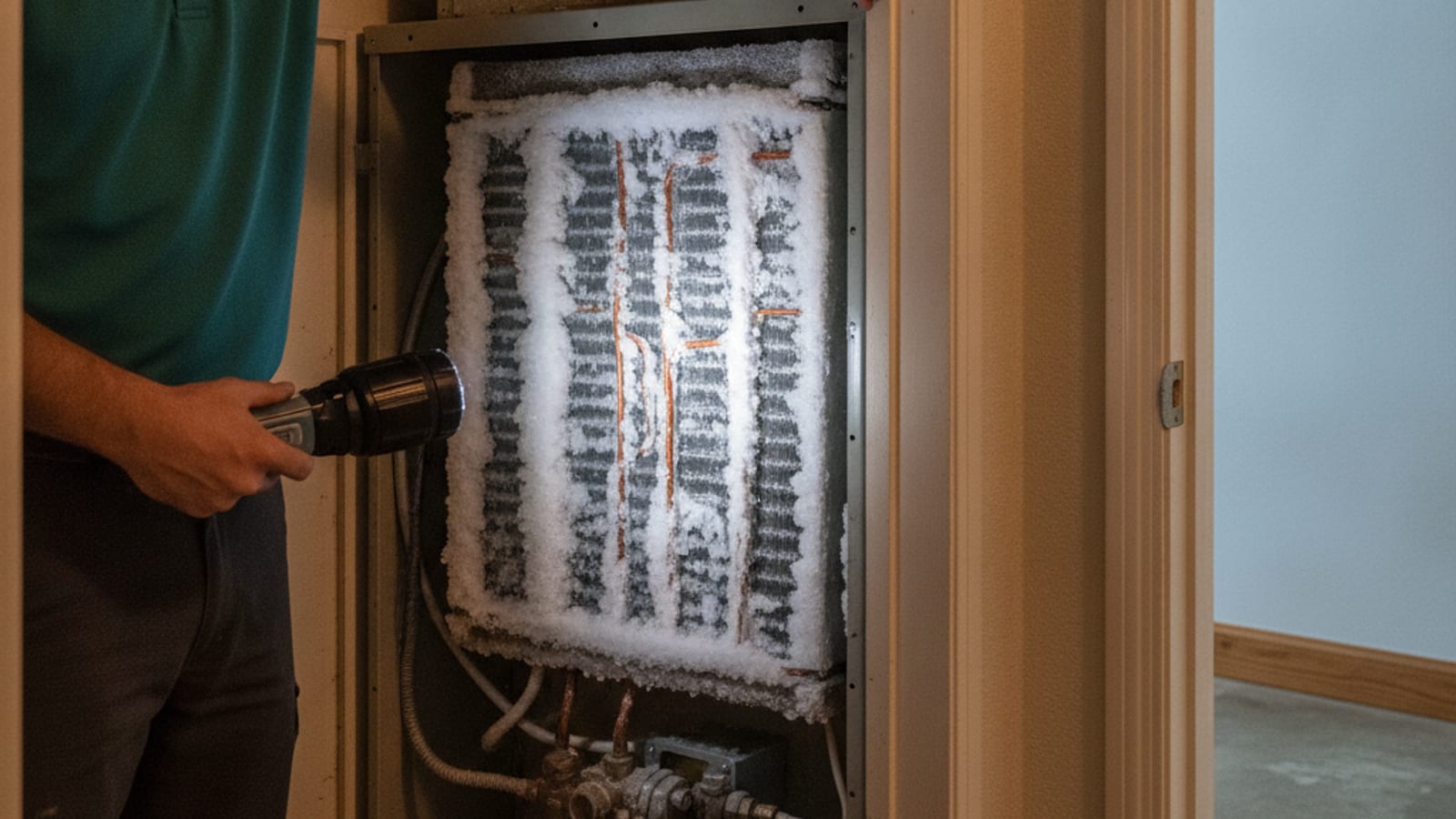
An AC that’s running but not cooling almost always traces back to one of three causes: a failed capacitor, restricted airflow from a dirty filter or frozen coil, or a refrigerant leak. Each has different symptoms. Knowing which one you’re looking at helps you describe the problem accurately when you call for a same-day repair.
Englewood Air Pro connects Sarasota and Charlotte county homeowners with local HVAC pros for AC repair, and a real diagnostic, not a guess, is what actually separates these three causes.
Why is my AC running but not actually cooling the house?
The outdoor unit and indoor blower can both sound normal while the system does almost no real cooling. That points to something inside the refrigeration cycle rather than a simple power problem. A weak or failed run capacitor is the most common culprit in this climate, since it wears down gradually under nine months of near-continuous run time until the compressor or fan motor can’t start correctly. Low refrigerant charge and a frozen evaporator coil are the other two frequent causes, and both restrict how much heat the system actually removes from the air even while it keeps running.
Why does ice form on my AC lines or indoor coil?
A frozen coil is almost never a temperature problem by itself. It’s a symptom of restricted airflow, usually from a dirty filter, a failing blower motor, or ductwork that’s choking off return air, or of low refrigerant charge letting the coil get too cold. Running the system with visible ice on it risks damaging the compressor, so the right move is to shut the AC off, switch the fan to run without cooling, and let the coil thaw completely before a technician arrives.
Why does my breaker trip every time the AC starts?
A breaker that trips on startup usually points to a compressor or fan motor drawing far more current than it should, often because a failed capacitor is forcing the motor to work harder just to start. It can also mean a wiring or electrical connection issue, which is more common on coastal systems near Manasota Key and Boca Grande where salt air accelerates corrosion at electrical connections. Resetting the breaker repeatedly without diagnosing the cause risks damaging the compressor further, and if the trip comes with any burning smell from the air conditioner, leave the system off entirely. This page covers a system that runs without cooling; if yours keeps cutting its own power instead, our guide to why an AC keeps tripping the breaker in Englewood walks through what the timing of the trip tells a technician.
Why is water pooling near my indoor unit?
Standing water near the air handler usually means a clogged condensate drain line or a tripped float switch, the safety device that’s supposed to shut the system down before an overflow happens. In Englewood’s humidity, condensate lines clog with algae and debris faster than they would in a drier climate, which is why a routine HVAC maintenance visit includes flushing that line as standard practice, not an upsell.
Why won’t my outdoor fan spin even though the unit is humming?
A humming outdoor unit with a fan that won’t turn usually means a failed run capacitor or a seized fan motor bearing. This is one of the more urgent no-cool symptoms, since the compressor can overheat and take further damage if it keeps trying to run without the fan cooling the coil. Shutting the system off at the thermostat and calling for emergency HVAC service protects the compressor from that added stress rather than waiting out the next scheduled appointment.
A yearly AC tune-up ahead of the summer load catches a weak capacitor or a drifting refrigerant charge before either one turns into a full no-cool call, which is usually the cheaper path compared to an emergency repair in August.
Is a jump in my electric bill related to a cooling problem?
Often, yes, even before a homeowner notices the house feels warmer. A system that’s losing refrigerant or fighting restricted airflow runs longer to reach the same setpoint, which shows up on the FPL bill before it shows up as an obvious comfort complaint. If your bill jumped with no real change in how you’re running the AC, it’s worth a diagnostic even if the house still feels reasonably cool.
Could a heat pump problem look like a no-cool AC issue?
Yes, and it’s worth ruling out since most homes in this metro run a heat pump rather than a separate AC and furnace. A heat pump stuck partway between modes, or a reversing valve that’s sticking, can leave a system running constantly without actually reaching setpoint, which reads exactly like a standard AC problem from inside the house. The diagnostic process is the same either way: check the capacitor, check refrigerant charge, and check whether the specific component that lets a heat pump switch modes is doing its job.
Could this actually be a thermostat problem, not the AC itself?
Sometimes, though it’s less common than the causes above. A miswired thermostat, a dead battery in a battery-backed model, or a thermostat that’s lost its schedule after a power blip can all make a perfectly healthy AC system seem like it’s not cooling. Before assuming the worst, check that the thermostat display is responding and the setpoint is actually below the current room temperature. If the wiring looks unfamiliar or the system was recently upgraded, a proper thermostat installation check rules this out quickly rather than guessing.
Systems that have taken storm-related electrical damage sometimes show these same symptoms without any visible sign of harm. Our post on emergency AC service after a storm covers how to tell a routine failure from storm-related damage. If your outdoor unit is showing early corrosion near the coast, see our guide on protecting AC equipment from salt air.
Frequently asked questions
Why is my AC blowing air but it’s not cold?
This usually means the compressor isn’t running correctly, often from a failed capacitor, low refrigerant, or a frozen coil restricting the system’s ability to remove heat from the air. The indoor blower moving air doesn’t confirm the outdoor unit is actually cooling it, which is why a diagnostic checks both sides of the system.
Should I keep running my AC if I see ice on the lines?
No. Shut the system off at the thermostat and switch the fan to run without cooling, or turn it off entirely, and let the ice melt fully before a technician arrives. Running a system with a frozen coil risks liquid refrigerant reaching and damaging the compressor.
How fast can someone come look at a no-cool AC in Englewood?
Same-day service is standard for a complete no-cool call given how quickly an Englewood home heats up without cooling. A diagnostic visit runs $89 to $150 and most repairs land between $150 and $650 once the actual cause is identified.
Can a dirty air filter really stop my AC from cooling?
Yes. A clogged filter restricts airflow across the evaporator coil, which can cause the coil to ice over and stop cooling the air effectively. It’s the simplest thing to check yourself before calling for service, and a fresh filter sometimes resolves the issue on its own.
Is a refrigerant leak dangerous to leave alone?
It won’t cause a house fire, but it does mean the system is running with less refrigerant than it needs, which reduces cooling capacity and can eventually damage the compressor if left unaddressed. A technician needs to find and repair the actual leak point, not just add refrigerant, since it will simply leak out again otherwise.
How do I confirm my AC technician is properly licensed?
Check the technician’s Florida CAC (air conditioning contractor) license directly at myfloridalicense.com before agreeing to any repair. We connect Englewood homeowners with experienced, insured local HVAC pros, and verifying that license takes about two minutes. If a handyman has offered to fix it for less, read what handyman AC repair can legally cover in Florida first.
If your AC is running but not cooling, call (941) 292-6250 and we’ll connect you with a local HVAC pro for a same-day diagnostic.